

New Phyrexia: Artful Destruction Review (Part 1 of 2)

Our next stop on our tour of New Phyrexia will immerse you in histories new and old, in particular the story of an entire class of creature that has long inhabited Mirrodin, and is now coming to the fore: the Golem. It’s fairly-well known that Mirrodin was once known as Argentum (see: Argentum Armor) and created by Karn, the Silver Golem. Karn was a part of the Legacy Weapon that destroyed the original Phyrexia. Unfortunately, during the course of the struggle against Phyrexia he had become unknowingly contaminated with Phyrexian oil, and when he created his artificial plane, the oil trailed behind him.
To safeguard and administer Argentum while he traveled the multiverse, Karn created a golem by the name of Memnarch. Memnarch became aware of a certain corrosion that was making itself apparent- a fungal contagion known as mycosynth (see: Mycosynth Lattice, Decimator Web) which converted metal into organic flesh. Memnarch couldn’t know it at the time, but the mycosynth was a byproduct of the Phyrexian oil. Recognising a threat, Memnarch created a group of golems (the Ur-Golems) to help stop the spread of the mycosyth. Ultimately unsuccessful, the Ur-Golems were dismantled by Memnarch (all save for Bosh, Iron Golem, who disappeared into the Dross).

2008-2009 Precon Championships: The Introduction
Last November, we ran the 2009-10 Preconstructed Deck Championships, which pitted that season’s crop of precons against one another through four Divisions, until the exciting series final left only one deck standing: Rise of the Eldrazi’s Eldrazi Arisen. A tremendous success, we’re already looking forward to the upcoming season this Autumn, but in the same vein we’re also wanting to go back in time to previous seasons and anoint winners there as well. Thus we are excited to announce the commencement of the 2008-09 Precon Championships!
For the 2008-09 season, we have a much-smaller pool to draw from as there was no Core Set or large-scale supplemental product release like the Duels of the Planeswalkers. As a result, most of the early brackets are byes. As before, seeding is completely random, and will use the same Conference/Division structure.
New Phyrexia: Feast of Flesh Review (Part 2 of 2)

Finally, our first games with the New Phyrexia decks are underway, and we’re all looking forward to seeing how they hold up on the field. In many ways, the decks of the third set in a block tend to be some of the most interesting ones, if only because the designers have a full three sets of cards (plus a Core Set) to pick from. Strategies that might not have been as sustainable in the first go-round now have the tools they need in the third. And frankly, we’re all pretty excited about New Phyrexia in a way we haven’t been with Scars or Besieged- it just looks like a fantastic set.
And so to break in our opening matchup, Sam joined me at the table with Ravaging Swarm, a Simic-style construction that combines infect and proliferate to deadly effect. Would she be able to poison her way to victory? Or would the abundant removal in Feast of Flesh give her critters fits? There’s only one way to find out, and here are the notes from the matchup.
New Phyrexia Intro Pack Giveaway

New Phyrexia is nearly upon us, and what better way to ring in the new set than to give away an Intro Pack to one of the excited precon community. That’s right, it’s another comment contest!
Here’s how it works:
Three days after we have posted reviews of all five of the New Phyrexia intro decks (Thursday, 26 May), we’ll tally up the comments left by everyone for each of the five decks. Comments on both the playtest and the review count, and you can post any number of times! (As always, posts must be at least reasonably substantive to count- “cool deck, kthnxbai!” won’t count).
Whichever deck has generated the most comments (between both halves of the review) will be the one that we will be giving away. To determine the winner, we’ll select one commenter at random who posted about that particular deck. (For instance, if Feast of Flesh got the most comments, one random commenter from the Feast of Flesh reviews will be selected to win- that’s right- Feast of Flesh).
You may want to be sure to leave a comment on each of the five decks to ensure you are in the drawing for whatever deck we end up giving away, but of course the amount of comments you leave is entirely up to you- as many or as few as you like!
We hope you’ll enjoy the New Phyrexia reviews as much as we’ll enjoy crafting them, and hey- a shot at a free Intro Pack is always a plus!
MBtB: Buyer’s Guide to ‘Classic Era’ of precons up today
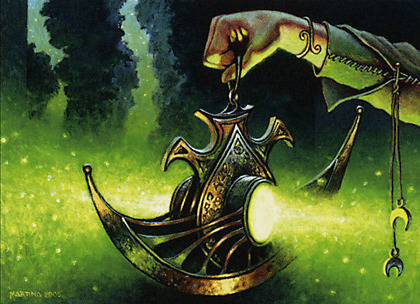
Meanwhile, over on Quiet Speculation… I continue assembling the Buyer’s Guide to Precon Decks today with a look at the ‘Classic Era,’ everything from Onslaught through Coldsnap. Whether you’ve been looking to build your collection or just pick up a couple old decks for the sake of nostalgia, you owe it to yourself to check out our pricing guide before spending a single hard-earned nickel to find the cheapest way to get them. Come by and say hello!
New Phyrexia: Feast of Flesh Review (Part 1 of 2)
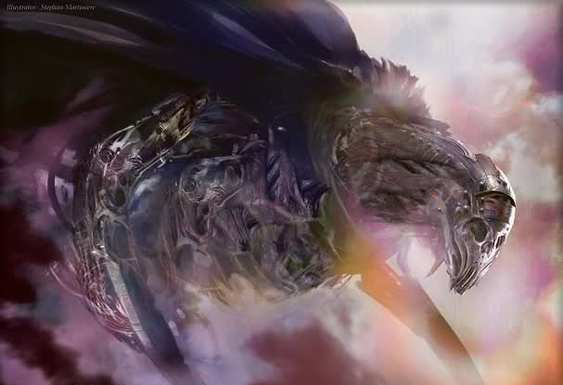
And so it has come to this. After months of secrecy and veiled ambiguity, we were finally told that in the fateful war for the very world of Mirrodin, the Phyrexians had prevailed. If the first half of Operation: Slow-Roll was a resounding success, it tragically ended with more of a whimper than a bang- a group of French players abused the trust of Wizards of the Coast, and the entire set was leaked right before the start of the official spoiler season.
This was sad news. As it happens, though, there is one heck of an upside- New Phyrexia is a very flashy set and worthy end to the saga that has unfolded since last October. In addition to fleshing out the current crop of mechanics, it added new innovations like Phyrexian mana to the mix, as well as cycles of very strong cards and a slew of epic legends. Of course, after taking everything in, our question is a simple one: how do the intro decks stand up?

Mirrodin: Bait & Bludgeon Review (Part 2 of 2)
Our final match of the set, as we prepare to take our (very temporary) leave of Mirrodin, at least until the release of New Phyrexia right around the corner. For our final showdown, I’ve got Sam and Sacrificial Bam to look forward to, while I pilot the fun-with-affinity deck Bait & Bludgeon. One of our readers recently commented that the thing they enjoyed most about this series of reviews is that it has permitted those of us who weren’t active players during this release to see what Mirrodin was like before the Phyrexian plans started to hatch. It might well be so that Wizards had the Scars of Mirrodin-block sequel in mind when they said goodbye to this metallic world neatly seven years ago, but for many of us this is a first-time exploration of a world grown only recently familiar.
With that sentiment in mind we squared off for the customary three games, and here are our notes.
New Phyrexia Intro Pack Decklists Up!
In case you missed it, the deck lists for the upcoming New Phyrexia intro packs has been officially confirmed on the mothership. A significant change that’s been noticed already is that both rares in the pack don’t necessarily come from New Phyrexia- SOM cards like Precursor Golem and Argentum Armor have found themselves a place in the new decks. Check it out!
Ertai’s Trickery: The Bloodsuckers’ Ball Concludes

The final third of our guest piece for Red Site Wins went up today, and The Bloodsuckers’ Ball- a Vampire aggro deck made from blending three precon decks in the current Standard environment- is now complete. Head on over and check it out!

Mirrodin: Bait & Bludgeon Review (Part 1 of 2)
Mirrodin introduced a few noteworthy mechanics to the game, one of which has become ‘evergreen’ (or core set mechanic) and another which has something of a black mark attached to it. It’s hard to imagine the contemporary game without Equipment, but prior to Mirrodin that artifact type didn’t exist. You might have cards that simulated it, ranging from Ashnod’s Battle Gear to Flaming Sword (which actually was a creature aura). Indeed, even at the start of the game there was a certain flavour gap between artifacts that were obviously player-focused (like, say, Sunglasses of Urza) and those that might almost be considered proto-Equipment like the Helm of Chatzuk and Illusionary Mask. Mirrodin finally did away with that rather awkward disconnect and made Equipment explicit.
Another characteristic of the set was the entwine ability. Much less interesting than the Equipment, entwine was essentially a bi-modal variation of kicker. Kicker, introduced in 2000’s Invasion block, was an optional cost attached to a card that gave you additional effect if its optional cost was paid. Look at Agonizing Demise, for instance- it kills a creature, and if you pay the kicker it will also deal damage to that creature’s controller. The first part (the spell’s effect) is fixed, but the optional part is the “kicker.”


 Ertai's Lament