

Magic 2011 Intro Pack Decklists Revealed
Today on the mothership, Monty Ashley (of Magic Arcana) spoiled the decklists for the upcoming M11 Intro Packs. Check it out!
Archenemy: Scorch the World with Dragonfire (Part 2 of 2)

Welcome back to the last installment of our Archenemy review series! Over the past two weeks we’ve mucked about in the graveyard, tinkered with gears and cogs and danced in the rubble, but today we’re taking wing and soaring aloft on some of Magic: the Gathering’s most beloved and iconic creatures.
In short, here be dragons!
And not just any dragons, mind, but a clutch that will scorch and torch their way across the red zone, causing your opponent’s life to drop almost as quickly as his Llanowar Elf soiled itself watching them fly past.

The Dirty Half-Dozen
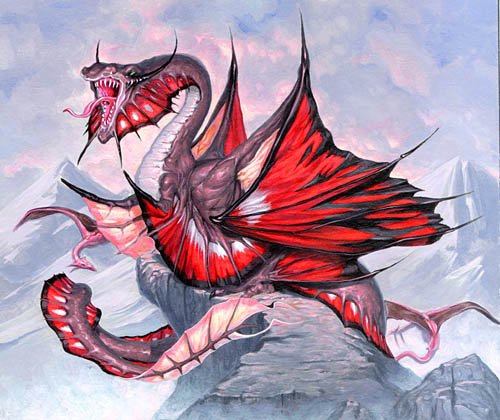
Two-Headed Dragon: The disruptor of the bunch, it can’t be blocked by less than two creatures, making it much harder to chump. Should you find yourself (momentarily) on the back-foot, it can block up to two critters as well. Oh, and it has firebreathing.
Flameblast Dragon: This one’s a nasty sniper, adding some targeted removal (or just some extra damage to your hapless opponent) to its arsenal.
Kilnmouth Dragon: Another dragon with a snipe-effect, this one uses the Amplify mechanic to hideous advantage.
Hellkite Charger: Not only equipped with haste (surprise!), the Charger can let you get in two attack phases each turn.
Ryusei, the Falling Star: Ryusei’s abaility triggers when he heads for the graveyard, a very lethal kiss goodbye.
Imperial Hellkite: A utility trickster, the Imperial has Morph and can be used to tutor up- guess what- another dragon.
And there they are, the crown jewels of the deck. But they’re far from the only dragons present- Scorch is absolutely silly with them:
2x Dragon Whelp
Well, those last two aren’t precisely dragons, but their Changeling ability ensures that they, too, can be used for Amplify or tutored by the Imperial.
Although pricey, it’s a strong tribal assortment which is rounded out by a few utility creatures (most notably Dragonspeaker Shaman, Fierce Empath, additional Morph beaters to sufficiently camouflage the Morphing dragon). It has a daunting mana curve, as is to be expected, but Scorch does a lot of things right in giving you the ability to deploy your air force at a competitive pace.
Over Here’s the Runway
So if the dragons are the apex of the deck, what constitutes its support structure? A solid deck trajectory can be constructed thusly:
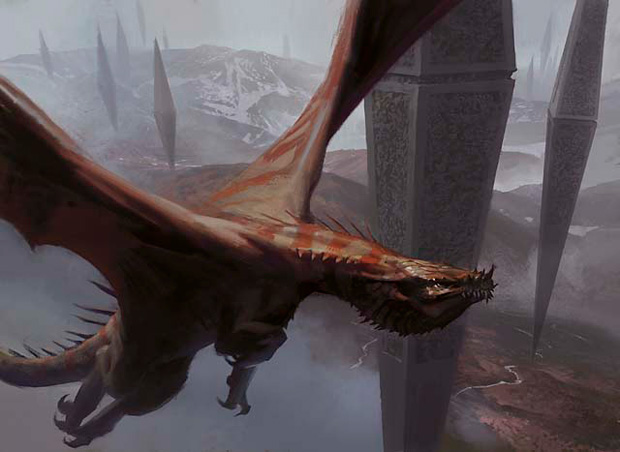
Blow Up the Early Game: Your opponents will generally want to squeeze about a crop of one-to-three drop creatures to harry you with. Let ’em. Sweeper effects like Savage Twister, Volcanic Fallout, Breath of Darigaaz and Fireball will punish them. Chandra’s Outrage and a pair of Branching Bolts will provide spot-removal. The Skirk Commando and Marauder pull double-duty, acting as damage and a body. And in a pinch, Dragon Fodder can deliver a few chump-blockers while you get through the crucial early game.
Ramp: While slinging fire and keeping their attackers’ heads down, don’t forget to ramp for the dragons. A turn 2 Gruul Signet is optimum, and the Thran Dynamo can help, too. A Dragonspeaker Shaman is a gift, use him wisely by keeping him out of harms way between your third and sixth land drop (or equivalent mana base via artifacts). A pair of Seething Songs can also get a Dragon out by themselves as early as turn 4.
Rule the Skies: By now you should now start to break even, with your enemy’s ranks thinned and some ways to get those critical dragons out of your hand. Play early ones with the Whelps when you can, then drop the bombs. Dragons are deal-with-or-die creatures, and all of them reward you for aggression.
There aren’t many extraneous cards in Scorch. Battering Craghorn, Gathan Raiders and Dragon Breath seem to be there just to fill spots. The Breath is particularly disappointing- essentially Firebreathing + Haste in a deck where a number of the creatures allready come with Firebreathing as a standard feature, with the usual vulnerability of being a Creature Aura.
What You See Is What You Get
Like Trample Civilization Underfoot, this deck is very straightforward, and in keeping with the flavour of red can be very much feast or famine. Fast, aggressive decks in particular can eat your lunch with a bad draw, or if you don’t get a dragon out in time. On the other hand, an early Seething Song and/or Dragonspeaker Shaman can put your opponent on a very fast clock. If taking the occasional shambling loss in exchange for some glorious, wings-of-death victories is a draw to you, you’ll feel right at home with this deck. As for me, I tend to prefer a bit more consistency.
Final Grade: 3.25/5.0
Archenemy: Scorch the World with Dragonfire (Part 1 of 2)

Eager to play the part of dragon-mad Sarkhan Vol, I suited up behind the Archenemy Scorch the World with Dragonfire deck and challenged Sam to the customary three matches. Given the choice of weapons, she chose to play one close to her preferred means of play- Green/White, the Trample Civilization Underfoot deck.
I was excited at the prospect- the last deck I playtested was the Trample deck, and while I admired its efficiencies, I didn’t find it very entertaining. Seeing how it managed in her capable hands would be helpful to gain additional perspective. After a roll of the dice, Sam would be on the play.
Game One
As is typical with the Archenemy deck suite, we get off to a slow start for the first couple turns, first with basics (her Plains, my Mountain) then getting a little fancier (her Mosswort Bridge, my Kazandu Refuge). Sam opens turn 3 with a Watchwolf, and the game is on.
The Watchwolf’s first attack is thwarted by a Branching Bolt– with a handful of burn, I’m not afraid to set the tone early. Turn 5 sees reinforcements arrive as Sam plays a Wickerbough Elder, and I respond with a Chameleon Colossus enchanted with Dragon Breath, going right in for the attack. Sam’s down to 16, I’m at 21.
Sam then plays Primal Command, opting to gain 7 life and tutor a critter from the deck. She clears off the Dragon Breath with the Elder, and attacks for 4. This leaves me free to bring in the Colossus for another 8 the following turn, after having nothing to play from hand. It’s now 15-17, slight edge to me.
Turn 7, and Sam’s busy with another critter- this time a Feral Hydra who greets the world as a 5/5. Again I keep it close, Fireballing the Hydra on my next turn. Our two beaters in play keep passing each other midfield, carving off life four at a time.
Molimo, Maro-Sorcerer appears the turn following, and now I am in trouble. His added power triggers Sam’s Mosswort Bridge hideaway, and she reveals another Forest. Normally laughable, but Molimo welcomes the addition. The turn after that adds another legend- Kamahl, Fist of Krosa, which I hit with Chandra’s Outrage immediately. The two damage to Sam brings us even at 9-all, and my turn 9 play is simple Fires of Yavimaya.
Sam proves hard to kill, however, when she casts Heroes’ Reunion on turn 9 alongside a Hunting Moa, which adds its counter to the Elder. I cast a Dragon Whelp, but am dismayed when she responds with a Pale Recluse.
Sam begins to give away the game here, though, with a pair of ill-advised attacks when she miscounts the land I have in play not once, but twice, and my Chameleon Colossus eats both her Wickerbough Elder and Molimo (though in fairness, I had to sac my Fires of Yavimaya to keep the Colossus alive on the latter one). In return, her Recluse opts to trade with my counterattacking Dragon Whelp. By lucky turn 13, it’s an 8-6 game with a mire in the middle.
Sam falls prey to some nasty sweepers in the next few turns, keeping her side of the board relatively clean. Volcanic Fallout sends the Moa and a fresh Leaf Gilder to the dustbin. I set up for the kill shortly after when I Breath of Darigaaz for one, killing her lone blocker (a Sakura-Tribe Elder which she wisely sacs) to clear a path for the mighty Colossus. Alas, its luck has run out as she shows a Path to Exile.
The standoff continues for a few more turns, a far longer than usual game, but eventually I mise an evasive critter (a Furnace Whelp) and see the job done.

Game Two
The next two games prove to be a study in contrasts, and a possible clue to the streakiness of the Scorch deck. They’re also much quicker affairs.
Sam again is off to a solid start with the creatuers. Her first five turns see her fairly well-stocked, with a Selesnya Guildmage, a Shinen of Life’s Roar, a Wickerbough Elder (which will turn out to be the play of the game), and a Fertilid seeing play.
Having seen no real dragons last game, I’m flush with them now, keeping a hand that had two and drawing far more quickly than I would have cared for into two more. But by turn 5 I’ve only managed a Gruul Signet and Furnace Whelp. Sam’s turn 4 Wickerbough Elder tragically smashes my Signet, though, and I see my dreams of dragon mastery slipping away.
I manage a second Signet on turn 5, but the damage is done, I’m too far back to catch up as Sam adds a Nantuko Monastery and Pale Recluse to the board. I get some chumpers out- a Fierce Empath and Taurean Mauler– but when Sam alpha strikes on turn 8, I just don’t have enough bodies. All in all, a very disappointing outcome.
Game Three
Our final match shows me a bit of a dilemma in my opening draw. I open with two dragons, a Dragonspeaker Shaman, a Seething Song and a pair of Mountains in hand. I like what I see, but having only two lands make it an uncertain prospect. Red being the colour of chaos, however, I decide to roll the dice, and am well rewarded by drawing into land two my next three turns.
Like clockwork, the Shaman hits the table on turn 3 (after a turn 2 Dragon Fodder I picked up), and the Flameblast Dragon takes its rightful and majestic place at the head of my Goblin army. Sam’s luck has run out- by now all she’s managed is a lowly Sakura-Tribe Elder, and I’m considering the game more or less done.
Doubly so when I draw and play Ryusei, the Falling Star next turn, and Hellkite Charger the turn after that.
But Sam is playing a deck that refuses to die. She Oblivion Rings the Flameblast on turn 5. Fogs on turn 6. Plummets the Hellkite Charger on turn 7. And grasps a bit more life with Heroes’ Reunion on turn 8. Eventually, Ryusei’s persistence pays off, though, and however valiant a defense, Sam falls to the inevitable, scooping on turn 8.

Who's doing all the 'trampling' now?
Cockroach Tactics
That third game in particular is worth a second look. It speaks both well and ill of the Trample deck that it was able to stubbornly cling to life against three dragons, particularly since two of them were eliminated by the time Sam fell.
New players in particular are often drawn to cards like Heroes’ Reunion and Fog. And playing in circumstances like the game above would tend to reinforce their justifications of such choices. Of course they’re good cards, the reasoning might follow, they bought me two whole turns against your dragon army!
The problem is, they’re quite right to say so, and having such ‘safety net’ cards can be a welcome comfort while learning an unfamiliar game.
It often takes experience, though, to show that like a comforting child’s blanket or favourite stuffed animal, there comes a time to leave them behind. Experience is what compels us to ask, well, what did we do with those two extra turns? And what problems did we solve?
Hanging on for hanging on’s sake accomplishes very little. Rather than buying another turn in hopes of drawing a solution… why not just draw the solution instead? Imagine if that Fog and Reunion were replaced by a pair of Plummets. Not only would you have bought yourself another couple rounds, you might even have turned the game around and won it. In Sam’s case, though, all it let her do was… draw another card.
It takes time to get that experience (I kept a tight grip on my own particular comfort-food, Stream of Life, for quite awhile when I started playing), and new or inexperienced players should always be encouraged. Sometimes just a probing question or two are all that’s needed to start them thinking. Wouldn’t you rather have drawn another Plummet?
That said, this matchup spoke very well to Trample Civilization Underfoot. It may have disappointed in the third match, but in both of the first two it was cranking out the beats with ruthless precision.
That’s all for now. Scorch was a fun ride to play, but did appear a bit inconsistent at times. Join me in two days when I dissect the deck, and see how it’s put together!

Opinion: Green’s New Direct Damage
Good morning! A bit of a tempest in a teacup seems to have arisen yesterday with the spoiling of Bee Sting from the forthcoming M11 set, and I thought I’d weigh in on it. Read more 
Archenemy: Trample Civilization Underfoot (Part 2 of 2)
Welcome back to our review of Trample Civilization Underfoot, the Green/White ‘demented druid’ deck which sees you taking on civilization itself! In Part 1 of the review, we felt that this deck was a strong one with some solid synergies, and today we put it through the paces to see how it held up. Sam confidently took her place behind Bring About the Undead Apocalypse, and as before wanting just to assess the decks themselves, duels were fought without recourse to the Scheme cards.
So does Trample live up to its potential? Let’s find out.
Game One
Having won the draw I’m on the play, and my opening move is a promising one: a Mosswort Bridge that puts a Wickerbough Elder into its hidey-hole. For her part, Sam drops a Barren Moor, and we’re off!
Both our decks (indeed, a commanility it seems shared by all the Archenemy decks) appear to look for slow starts to build a manabase before dropping their bombs, and this is only reinforced when my turn 2 play is a Leaf Gilder, Sam’s a Rakdos Signet.
Things heat up the next turn, though, when a pair of rares make themselves known. I drop a Forgotten Ancient, a relentless token-builder, while Sam plays the Cemetery Reaper, a Zombie Lord. We both look to be laying solid foundations, and it can go either way. My next play is a very interesting card, the Yavimaya Dryad.
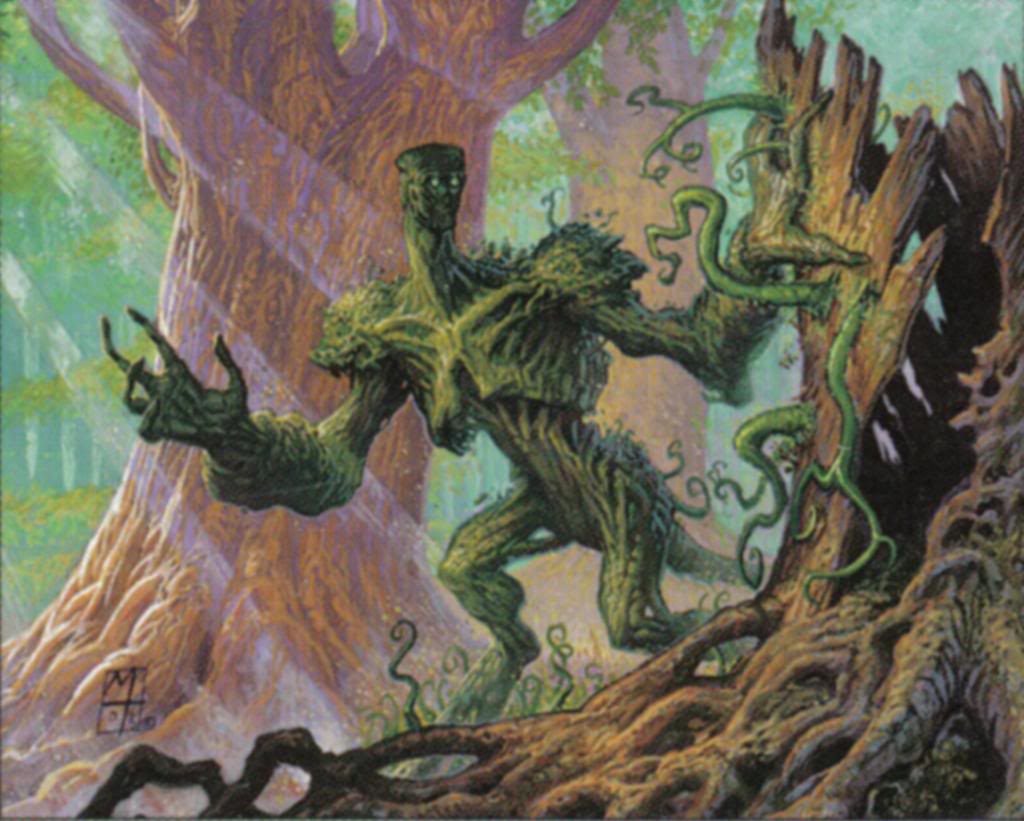
As mentioned in Part 1, the Dryad gives you the luxury of choice. It fetches a Forest when it comes into play, but puts it under the control of “target player.” Since she also has Forestwalk, there’s a certain utility in forcing the Forest upon your opponent (though the drawback is equally obvious). I love cards like this, ones that can be referred to as “skill testers” because there’s a judgment call that has to be made when playing them. What’s the greater advantage? A 2/1 unblockable creature? An extra land? The answer depends on the game state at the moment, and as a third-turn play in a manahungry deck facing an oppoent with generous access to removal, the right play here is usually to take the free land drop, and I do. I then attack with my Forgotten Ancient (now a 2/5), and Sam unsurprisingly declines the block.
Sam’s life total takes another two-point hit when she plays Sign in Blood, then she plays a Dregscape Zombie. My Ancient greedily welcomes the additional counters.
The Dryad’s free Forest helps me ramp into a turn 5 Krosan Tusker as the first natural fatty of the game hits the table, and I’m in for another 5 with the Ancient. Sam’s now down to 11. She has a solid rally, however, in the form of the Avatar of Discord. Gleefully eyeing the Shinen of Life’s Roar in my hand, I ready myself for the turn-6 kill.
I untap and Channel the Shinen of Life’s Roar, compelling her defense to focus only on the Dryad, and tap for the alpha strike. Sam’s ready for it, though, and Terminates the growing Ancient. With three blockers (the Avatar, the Dregscape Zombie, and the Reaper) lined up against her, the hapless Dryad explodes, but manages to take the Reaper down with her. When the dust and leaves settle, Sam’s standing at 3 life. I look down at my lands and sigh as I realise I just lost a chance to unhide the Elder under the Mosswort Bridge. Lesson learned.
In desperation, she casts another Sign in Blood, taking her to 1, and it seems to pay off when she draws into another Terminate. I play a Morph (Thelonite Hermit) and tee up again with everything. The Tusker meets the same fate as the Ancient, and the Gilder and Zombie trade. Sam draws even, but must concede the next turn when I unmorph the Hermit and play 4 1/1 Saprolings.
Game Two
I’m faced with an interesting early decision in this game. A solid draw has given me a couple of options. A Wall of Roots on turn 2 would allow me to drop the Forgotten Ancient on turn 3, maximising his early potential. Alternately, an early Watchwolf might put even more early pressure on her in the form of a body, but would not let me play the Ancient until turn 4. After some thought, I go with the Wolf. Although the tension between casting spells and growing the Ancient is a nice dilemma to put her in, the Ancient enters play as a mere 0/3. The turn 2 Watchwolf will be beating her down from turn 3 until dead. Let her deck live too long, and ugly things start popping out of the graveyard.
Sam gets off to a solid start, though, with a turn 2 Rakdos Signet and turn 3 Sign in Blood and Rakdos Guildmage. I draw into a Spider Umbra and stick it on the Wolf for his first attack. I then play a Sakura-Tribe Elder, and pass turn.
Sam throws something horrible away on turn 4 with her Guildmage, and puts a Goblin token into play, turning both the token and the Guildmage sideways. I block/sac the Elder and take 2 damage, happily putting another land on the board. My turn 4 play is, as expected, the Forgotten Ancient.
Sam Signs in Blood next turn and passes, seeing her life dwindle to 8, and is dismayed when I manage to bring out a Hunting Moa and Wall of Roots, attacking for 8 with the bloating Ancient and Watchwolf. Sam pitches another card into the graveyard, using the Guildmage to give the Wolf -2/-2, then trades it with the Guildmage. Sam goes down to 4.
While she tries to bravely battle back, casting an Avatar of Discord and unearthing a Corpse Connoisseur that made its way into the grave earlier, the “Shinen for the Win” strategy gets me there this time.
Although you wouldn’t know it from the scoreboard, the last two games have been something of a struggle for my mana base. Because the deck is so heavily Green, it’s not necessarily crippled by difficulties drawing into White. In the first game, I played my first Plains on the last turn of the game. In Game 2, I came across only one, fortunately in my opening hand. This problem would be much more disabling in the game to come.

Game Three
More utility land openers, when her Barren Moor is met with my Khalni Garden + freebie Plant token. Sam fishes for more options in turn 2 with Sign in Blood, and I drop another Forest. My opening draw looked solid if a little slow, and I was delighted to open with a Path to Exile in hand, figuring a Plains could come along as the game progressed.
Turn 3 sees Sam with an Urborg Syphon-Mage on the board, followed by an Infectious Horror the next. As for me, I’m lamely laying Forests and growing steadily more anxious.
Sam plays the lowly Festering Goblin turn 5, then trips the Syphon-Mage to lifesteal, and I watch in horror as the Avatar of Woe hits the graveyard from her hand. Although I’ve played little, I’m not without options. The Feral Hydra in my hand has been there from the start, but since at time of casting each +1/+1 counter costs one mana, and after casting costs three, I’ve been trying to strike a balance on the best time to cast him. With her Mage and Horror already at work on my life total and the Avatar festering in the grave, I make the call and play a turn 5 4/4 Hydra.
Sam’s pressure is relentless, however, and when she drops Zombify on turn 6 I hear the clock ticking. The good news is that I have yet to miss a land drop. The bad? Not a one of them is a source of White mana.
My Hydra is no impediment to the Avatar, who is able to waltz right past my defenders and cut my life total in half. Contrary to some belief, Green actually does have a strategic response to evasive creatures (Flyers, Forestwalkers, Unblockables, etc). Novice Green mages will frequently worry so much about them (particularly the flyers) that they can fill a decent chunk of their mainboard with answers (Windstorm, Wind Shear, Leaf Arrow, and now M11’s Plummet, for example)- answers which tend to become dead draws when the much-feared flyers aren’t being played against them.
The strategic response for Green, naturally, is pressure. Put enough of it on, and either the ‘Evasives’ won’t kill you before you kill their controller, or they’ll hold them back as blockers and/or chumps. That’s not to say that Flyer-hosers don’t have their place (Plummet in particular is being welcomed for its anti-Baneslayer capabilities), but individual cards are tactical. Playstyle is strategic. It’s important to recognise the difference.
Sadly for me, although I know what’s needed here, I just can’t quite get there. Pathing the Avatar would buy me enough time to wrest momentum from Sam and turn the tables, but the White mana never arrives. I concede after one more draw. The next two cards? Plains. Of course.

Anaylsis
Full disclosure time: I’m not exactly thrilled by Green (it’s my least-liked colour), but I’ll do my best to rate this fairly.
Trample is something of a ‘Plain Jane’ deck. It’s a solid and reliable choice, but not all that sexy. Bring About the Undead Apocalypse had that sexiness built in- cheating out absolute beasts which took the head off your opponent when they resolved. Assemble the Doomsday Machine appealed to one’s sense of cleverness with its many moving parts and interlocking artifacts (although, in fairness, it was hit or miss). Archenemy’s Green/White offering gets the job done, but doesn’t gain many points for style. Although I like the versatility of the paths to victory (Big Dumb Beats ™ and/or Token Swarm), and the cards do work well together, it had a few weaknesses as well.
Onesuch was the land. In Part 1 of the review, I held up as a virtue the tremendous diversity of land in the deck for those looking to buy and integrate the cards into other projects. In actual play, they felt just a shade too clever. There were too many times I pulled out nonbasic land and just wished it was a Plains. Being fair, however, there was certainly some unluck in that- there are a number of ways to tutor up land in the deck, so I wouldn’t give Trample too black a mark on its account.
Although I won’t factor it into my rating of the deck on its own, I should mention here that I took on three friends the other night as the Archenemy, Schemes and all, and this deck was brutal. With Schemes that let you landhunt, others that dump token creatures on your side of the board, the Smash n Swarm was fully online. And unlike with Undead Apocalypse, I didn’t experience any Scheme “misses” where the effect fails to go off (for example, a Scheme that lets you pull from the opposing players’ graveyards is only useful when they actually have a graveyard, so it’s essentially a dead draw early in the game).
In the final analysis, this deck should make Green mages quite happy. The splash of White supports a solid removal suite, and the creature selection is nicely varied and interact well with one another. There are a couple “appear in other precon” type creatures (Krosan Tusker, Molimo, Maro-Sorcerer), but should appeal to those who like their rage against the corrupt, decadent and nature-despoiling world to come on the end of a very, very large stick indeed.
Or a whole bunch of small sticks.
FINAL GRADE: 3.9/5.0
Announcing Our Contest Winners!
At last, the dust has settled and the smoke has cleared, and after a week of furious commenting and following, the Ertai’s Lament Archenemy Contest has drawn to a close.
I’d like to thank everyone who visited and participated- this was a tremendous success, and I’ve really enjoyed seeing all the interest in the preconstructed realm.
But hey, who am I kidding, you’re here to see the winners, so enough outta me.
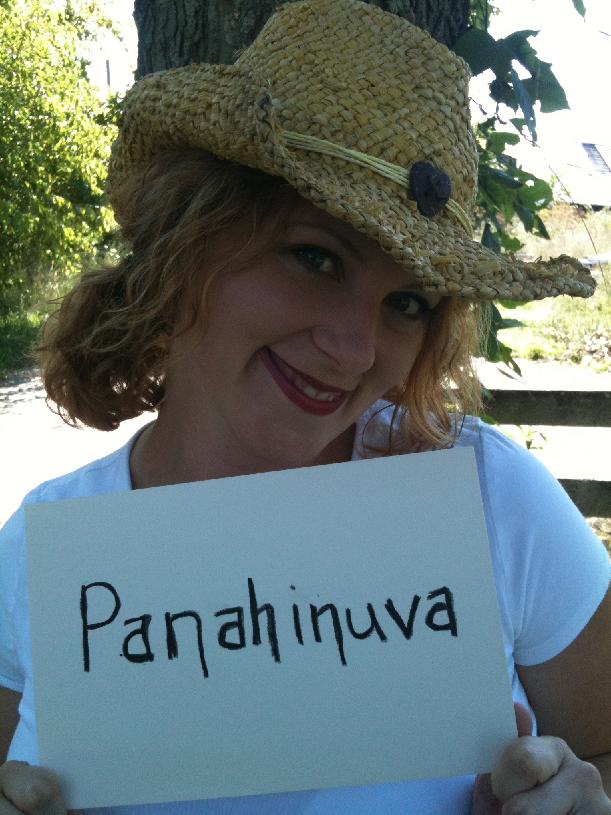
Were I a betting man, I probably would have bet on our grand prize winner, because there was hardly a post yet he didn’t comment on- both enriching the site, and maximising his chances to win at the same time. Here to present our Grand Prize winner is ErtaisLament’s own Jimi:
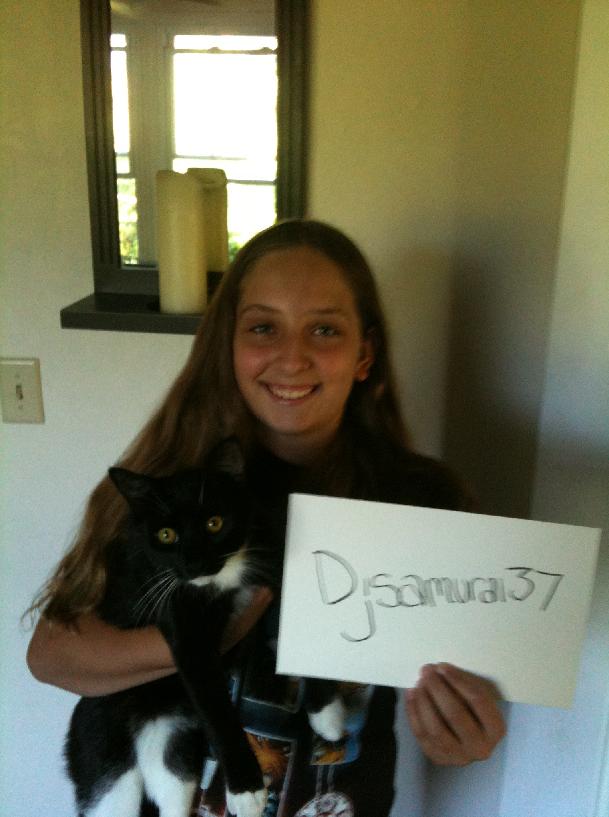
For runner-up, we have one of our Twitter followers! Awarding Second Prize are our very own Samantha and Neko (the Orzhov cat):
Congratulations to both! Kindly tweet me your preferred mailing addresses and which prize option you’d like (Grand prize was either 1 Archenemy box or 5 ROE or M11 boosters… Second Prize was an ROE or M11 Intro Pack or a trio of ROE or M11 boosters), and we’ll be underway. I must apologise in advance for a slight unnoticed delay with the holiday weekend, travel and all, but your parcels will be mailed within a week (assuming you didn’t take an M11 option, in which case we’re just waitingfor release). I’ll happily tweet you both once they are out!
By Way of Postscript
Like many players, I do fairly well in maintaining my Magic hobby, but am not so fabulously wealthy that I can afford to preorder a full-set playset every three months (good on ya if you are).
To that end, I’m always on the lookout for contests and giveaways, because unlike that sucker’s bet known as “the lottery,” the odds are pretty good and there’s no cost to enter. And even winning three booster packs is- hey- three more packs than ya had, who could complain?
Starting today, I’ll be keeping track on the blog of any and all contests and giveaways I come across. While that might theoretically lessen my own chances of winning, what’s good for all is good for each, right? Indeed, for your convenience and mine, this information will have its own tab. (It should be noted, though, that I’m just going to edit the page whenever new ones arrive and old ones conclude. Unlike feature articles, I won’t be clogging up your Twitter with updates).
So check back periodically… you never know what might be given away!
And if you happen to run a site that is doing a giveaway, feel free to notify us and we’ll be happy to list it.
Good luck!
Archenemy: Trample Civilization Underfoot (Part 1 of 2)

Halfway through Archenemy, we’ve assembled a doomsday machine and brought about the undead apocalypse, but one could not be faulted for wondering… what options are there for the more primal-minded? The diabolical, mad-as-a-hatter misanthrope who’d like nothing more than to see cities crumble, roads fall to ruin and fields go to seed?
Well wonder no more, friend, have we got the package for you! 60 cards which would make the Dominarian version of the Earth Liberation Front proud, we have Trample Civilization Underfoot!
Coming as a surprise to no-one, Trample is the most creature-heavy of the four Archenemy decks, possessing only 13 noncreature spells. That said, it’s also a surprisingly well-rounded deck with some intriguing synergies.
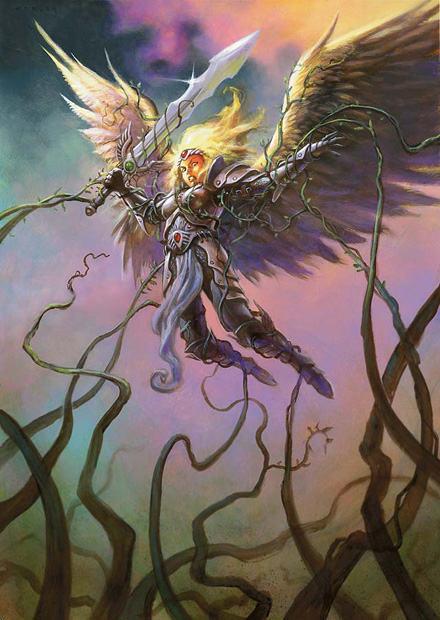
Beasts of the Wood
Let’s start with the critters.
The first thing you’ll note is that the deck has a strong beater focus. Every creature in the deck is either Green or multicolour/hybrid, and while there are a number of utility creatures packed in here, Trample seems to have a soft spot reserved for utility critters that can also deliver a beating.
It also gives you a number of tools geared towards ramping up your mana base, a Green specialty, all of which have a body attached to them- no Rampant Growths or Harrows here! Two Walls of Roots act as supplemental mana generators while blunting an early creature rush. A pair of Sakura-Tribe Elders fetch lands, and there’s the token mana dork- in this case, a Leaf Gilder.
Moving past the two-drops, the three-drop area are also similarly focused, but with a twist. The four ramp-creatures in this range have been selected for versatility as much as utility, for in them you get a choice. A pair of Fertilids ask you: what do you need more, a 3/3 body or some lands? The two Yavimaya Dryads offer a similar decision: do you want the Forest they bring with them for mana production? Or would you rather place it under your opponent’s control so that their Forestwalk is guaranteed to matter?
Importantly, Trample tends to favour adding resources in the form of lands versus mana dorks. Indeed, the deck notably sports no one-drop critters, as if telling you immediately to gear up for the long haul as it gives you the tools to make it pay off.
And pay off it does.

Then the Bough Breaks
Upon closer inspection, Trample becomes quite a bit subtler than the general Green strategy of Ramp Up, Cast Fatties, Smash Face. That option’s certainly there, of course, well represented by the Krosan Tusker (who further adds to the land ramp with his Cycling+Basic Land ability); a Pale Recluse (which landcycles too); the stalwart Molimo, Maro-Sorcerer (fresh from pulling duty in the Teeth of the Predator); the Feral Hydra; and Kamahl, Fist of Krosa (who can animate your land and cast an Overrun every turn until your enemy is just a smudge on the forest floor). An impressive list on its own, let’s now turn to the other synergistic win condition the deck offers.
To players who know and love the Avenger of Zendikar and/or are well familiar with the strategy of taking a bunch of free little things, making them bigger, and swarming in for the kill, Trample will seem like deja-vu all over again. Rather than Plant tokens, however, Trample looks to get there with those Fallen Empires favourites, the lowly Saprolings.
The Selesnya Guildmage acts as a splendid mana sink to pop out the little buggers. A Thelonite Hermit not only can conjure up a quartet of them, but acts as a Lord (giving them all +1/+1). A friend to EDH players everywhere, the deck packs in three Legends, and the last one- Verdeloth the Ancient– is the keystone of the Saproling stratagem, acting as both X-many Saproling generator as well as a second Lord. Finally, Vitu-Ghazi, the City-Tree is an alternate- and harder to eliminate- token generator. If you can’t get there with Big Dumb Beats ™, Trample sets you up for success nonetheless by giving you the swarm option (bolstered by tricks like Kamahl’s Overrun and Shinen of Life’s Roar clearing a path).
And Now, the Best of the Rest
One might reasonably expect the usual suite of Green combat tricks and throwaways to populate the non-creature spells, but here the deck’s designers appear to have been rather canny about trying to shore up most of Green’s weaknesses (for indeed, Trample Civilization Underfoot only really splashes White for utility).
There are answers to flying creatures in the form of Spider Umbra and the M11 “preview card” Plummet, in addition to the Pale Recluse. But more than that, there’s some very solid spot removal in here as well. A single Path to Exile and a pair of Oblivion Rings– top-tier Standard cards all- give Green some very real answers to the customary problems of blockers and- yes- even enemy Planeswalkers.
For those decks relying on them. there’s plenty of artifact and enchantment hate as well. The O-Rings, Wax//Wane, Gleeful Sabotage, and even a pair of Wickerbough Elders amongst the beaters. Add a splash of creature enhancement (the pesky, cockroach-like Rancor, Armadillo Cloak), a wee dram of utility (Primal Command, Harmonize), and- alas- a couple subpar options (Heroes’ Reunion, Fog) round out the list.
Land Ho!
As an added bonus, players perhaps looking for some nonbasic lands for their cube will appreciate the nine this deck is populated with. These range from simple Commons such as Secluded Steppe, Tranquil Thicket, and the slightly-out-of-place Khalni Garden; to mana-fixers and the truly unusual (Graypelt Refuge, Krosan Verge, Nantuko Monastery, Llanowar Reborn); and even to a Rare (Mosswort Bridge). It was a nice touch to see the deck not just come with a string of basic lands and a couple bland “flavour lands.”
All in all, Trample has a very solid feel to it. It’s well-curved, where other Green precons can take on a bit of a “gutshot” feel (here’s some weenies and some fatties, you’ll need to just grip and hold on in between), and having some flexibility with your creature strategy is a welcome break from Big Dumb Beats ™. That it’s a nice collection of cards with a smattering of Lands and Legends is added gravy. It does seem that Wizards has begun keeping an eye out for its EDH community as well, making preconstructed decks have value even when broken down into raw cards.
But having torn the deck apart, the question now becomes… how does it play? Does it give you enough tools to stabilise and begin to ramp? Is there an appreciable impact in basically yielding the first turn every game, having no turn-1 play, or can it make up the lost momentum through speed and size?
Thanks for joining us on the dissection. Come on back in two days’ time, and we’ll have the answer!
Contest Closed!
Just a brief note to say that the Ertai’s Lament Archenemy contest has now closed! Turnout was tremendous, and we’ll be scribbling all the names on paper slips and preparing for our drawing!
Look for the results to be announced this Friday, 01 July!
ErtaisLament.com on Monday Night Magic!
Another fixture of the Magic community has been kind enough to pass on the word about the site and contest we’re running. Tom and Eric of Monday Night Magic took a moment in their podcast to give mention.
Eric: I haven’t had a chance to review it yet, so I’m just gonna put it out there. It’s ErtaisLament.com
Tom: Oh yes, yes
Eric: Okay, so his blog is dedicated to all things preconstructed in the world of Magic, and to celebrate Archenemy he’s having a giveaway… He tells me I’m more than welcome to enter for myself, since I’m not a host on his blog I can enter. [laughs] But I already picked up all my Archenemy. I haven’t checked it out yet, so if you’re interested in preconstructed stuff… you can admit that Wizards is getting better at preconstructed stuff, so check it out!
Certainly between covering this past weekend’s StarCityGames.com’s Open in St. Louis and putting up several reporting podcasts as Mr. Suitcase on MTGCast, Eric’s had a lot to keep him busy- no worries on not making it over yet, but we hope he has a chance to visit and maybe check out the contest (since it’s not just Archenemy being given away!)
For those of you who haven’t yet discovered it, MTGCast.com is one of the best storehouses of Magic-themed podcasts on the web, and Monday Night Magic is their flagship production. It’s my Tuesday-morning must-listen on my commute to work, and we thank them for the mention!
Archenemy: Assemble the Doomsday Machine (Part 2 of 2)
Welcome back to our Archenemy reviews on Ertai’s Lament! When you last left us, we’d disassembled the Doomsday Machine, and found it a delightfully intricate set of gears and bolts ready to help you take over the world! Eager to put it through it’s paces, I enlisted the help of an equally-eager Sam to pilot Scorch the World With Dragonfire, and see how it held up. With both decks designed with their respective Schemes in mind, it seemed like a fair matchup with both of them having to do without (a bit like subtracting x from both sides of an equation).
Game One
The first game starts out slowly. For me, at least. By turn 4 I’ve managed only an Everflowing Chalice (kicked at the sweet spot- twice) and a spot of mana fixing with a Terramorphic Expanse. Sam, meanwhile, has dropped some fixing of her own- a Gruul Signet– and a Taurean Mauler for an early threat. Sam, who is on the play, starts turn 5 with Fires of Yavimaya.
Thanks to the Chalice, though, I’m able to deploy the Duplicant a turn early, taking care of her threat. Her turn 6 replacement, a Skirk Commando, isn’t near as threatening, and the game begins to pivot as I put down a Fieldmist Borderpost and Master Transmuter.
Sam again looks to threaten next turn, when she summons a Chameleon Colossus, which swings in thanks to the Fires of Yavimaya granting it Haste. I’m down to 11 life with Sam at 20, but I’m liking my board development and have an answer in my hand to the pesky Colossus. I play a Mistvein Borderpost and pass turn.
Turn 8 sees Sam playing a Thran Dynamo. Sam’s been a little lean on the land drops, and this promises to be a help. She swings in again confidently with the Colossus, but it’s time for me to go to work.
I use the Master Transmuter to return the Everflowing Chalice to my hand, and replace it with a free Sundering Titan, which makes short work of her attacking beater. Once my turn rolles around, I exploit the delightful synergy the Chalice offers to the Transmuter, playing it unkicked for free, using the Transmuter to return it to my hand, and playing an Unbender Tine for free. Net mana savings: 3. The Titan continues to make itself known by rumbling into the red zone for 7. Sam’s now at a more reasonable 13, while I’ve stabilised at 11.
The next couple of turns see Sam throwing out chump blockers in the form of a Kilnmouth Dragon, a Furnace Whelp, and a Morphed critter. My Unmake and pair of Agony Warps clear the way and the Titan seals her fate.
Game Two
One piece of advice I often give to newer players is, “beware the deck with too many moving parts.” Even the top-level pros will admit to making multiple mistakes each game, and having too many may-triggers in play can put you at disadvantage with natural human forgetfulness. I could have been given no better reminder of this than in game two.
It started quietly enough, with Sam playing an early Dragon Fodder and Dragonspeaker Shaman, while I laid out a Sun Droplet and Mistvein Borderpost. With Sam again on the play, turn 4 leads off with another Morph creature, while I shore up my position with an Aether Spellbomb and Synod Centurion.
Things take a turn for the worse on turn 5, however, when Sam’s Shaman enables her to cast Ryusei, the Falling Star. Trouble! She’s been coming in with her Goblin tokens and Morphed critter already, and thanks to some drip healing from the Drop, I’m still at 15.
I follow up the Centurion with a Metallurgeon for support, then Sam meets that with the Fires of Yavimaya again before swinging in with the dragon for another 5. I see board control start to slip from my grasp.
Turn 7, Sam plays another Dragon Fodder, looking to stall I trigger the Spellbomb to bounce the dragon. And drip, drip, drip each turn, I’m getting 1 life back from the Drop. I go in with my Centurion and Sam makes an even swap for her four Goblin tokens. I’m able to regenerate the Centurion with the Metallurgeon, but it’s set me back- I’m just the one mana shy of a Sundering Titan. Oh well, next turn it seems…
Sam goes all in the next turn, and I Batwing Brume. Things are looking increasingly dire as Sam and I begin trading blows back and forth, her flyer and my beater. But something small and unnoticed, but eventually critical happens on that eighth turn.
I forget the may trigger on Sun Droplet. Although I catch myself the next turn, I would end up paying quite the price for it.
The rest of the game furiously unfolds. Chandra’s Outrage smokes my Centurion, with me tapped out from casting the Titan. I play another Aether Spellbomb, desperately buying time. A nearly useless Unbender Tine sits out on the battlefield. I’m down to six life, Sam at seven. She brings out a Two-Headed Dragon and comes in with the pair of wyrms. I sacrifice the Spellbomb, bouncing Ryusei, but she gets lethal by sacrificing Fires of Yavimaya for her unblocked Dragon.
The masochist in me compels my hand to reach over to my library and see what I would have drawn next turn, a turn I would have had had I remembered that one turn’s Sun Droplet.
Magister Sphinx. Of course.
Game Three
If game two was a heartbreaker, game three would turn out to be infuriatingly frustrating, and all thanks to one single card.
With both our decks seemingly keyed to early buildup, the first spell cast is Sam’s Dragonspeaker Shaman at the end of turn 3. I groan, but my dread is mitigated by the delight in breaking out an early Skullcage. With a full grip, the ‘Cage goes right to work on Sam, and would for the entire game, a ten-turn timer.
By turn 5, I realise that I’m not going to get very far without a Swamp, as I’ve had consistent drops but all Islands and Plains. I turn some land sideways and trot out the Sorcerer’s Strongbox. Sam’s play? Another early dragon, this one again of the Two-Headed variety.
With the Unmake in grip but with only two Plains out, I’m gagging for the Swamp all the more. I tap two and trigger the Strongbox. I miss the flip. Pass turn.
Next out for Sam is the Taurean Mauler, and her Dragon chews on my leg for four. Me, I’m flipping a coin again. And failing. I’ve now paid eight mana for a card which has affected my board position exactly not one bit, all in the vain hopes of landing a Swamp and turning the tide.
Turn 8, “magic” happens as I luck into a hit on the Strongbox, drawing three cards. Total cost is now 10 mana, and the Memnarch I draw looks like too little, too late. I console myself with a somewhat useless Leonin Abunas.
Desperate for a blocker, I cast a Sanctum Gargoyle, and almost pass on returning the Strongbox to my hand out of spite. Sam, meanwhile, has played Gathan Raiders and keeps attacking (one turn nullified from Batwing Brume).
On turn 9 I draw into my third Plains, and am able to Unmake the Dragon. Next turn, I abandon any pretense of dignity and cast a Dreamstone Hedron with reckless abandon, paying the extra mana to sacrifice it for three cards and tapping myself out in the process. In my hand are Memnarch, Architects of Will and a Magister Sphinx, begging to come off the bench, all needing either just one more mana, or one Black mana (or both).
Chandra’s Outrage blasts the Gargoyle right out of the sky. While we’re even at 6 life (Sam’s damage entitely from the Skullcage whittling away at her, turn after turn), I have no threats and Sam does. The Gargoyle was the last bulwark against her aggression, and when it falls, so do I.

I See Dead People
There’s a postscript to this game that bears mentioning. As Magic players, we’re all familiar with probability and random chance. It’s why you pack four-of something in a deck rather than one-of and a prayer. Certainly, my loss here could be attributed to the lack of a Swamp, and there is certainly some merit there (though there’s seldom one cause for any loss, or even any win for that matter. The next thing I would revisit in breaking down this game would be my opening draw. Was it questionable? Worth shipping, perhaps? Was I overly optimistic about my chances with it? Was it missing a vital element- in this case, a Black mana source- that I was underestimating the necessity of? So many questions, so many opportunities to improve play).
That said, I believe there is still some value in assessing how a deck does in times of famine as well as times of feast. It’s easy to imagine how your deck runs when it runs well (for instance, if the words “first-turn Dark Ritual” have ever come out of your mouth), but it’s equally vital to see it when it does not.
You see, there’s something of a Shyamalan-style twist ending to game three, in that my tri-colour deck had to make do without Swamps. Sam’s two-colour deck? Not a Forest the entire game.
Some decks can handle it. Some decks can’t. It’s worth bearing in mind the next time you sit down to analyse a deck. If I took away access to an entire colour for the first three turns, what would happen?
The first five turns?
The entire game?
Something to consider.
Final Analysis
Doomsday Machine was a humbling reminder of the need to consider false starts and bad draws when assessing a deck. On first blush, it seemed very strong- well curved, a good assortment of cards and some very nasty synergies. Master Transmuter and Everflowing Chalice, for one, are a very wicked pair if they come out together. But these are preconstructed decks- they don’t optimise any particular card by running lots of multiples. Instead, you have to look at what role a particular card is playing (Ryan Spain of Limited Resources has many times when assessing new sets in the podcast spoken of looking for “analogues” in a new card pool. These shows- all of theirs, really- are well worth the time invested even if you don’t play Limited).
Having seven different mana fixers/accelerants is great, but what happens when you have more than enough mana as it is? These are enabler cards- they are never a solution to anything in and of themselves. Nice to draw them early, the last thing you want to see sometimes when you’ve got a pile of Islands and Plains in front of you is the Azorius Signet.
Likewise Sun Droplet and Unbender Tine… these are two cards I was never particularly happy to draw. The bulk of my ire, though, is reserved for the horrid Sorcerer’s Strongbox. Some people might really enjoy the whimsical sense of adventure they get from “luck” and randomness, but I am not one of those. I much prefer predictability and static costs, so that I can plan my turns accordingly. Chasing after this damnable artifact’s trigger felt nearly the functional equivalent of a snipe hunt (in the card’s defense, the average cost paid for drawing three cards is 7 mana + 1 card. I was just “unlucky,” but then that’s more to my point).
In the end, while Doomsday Machine felt strong under the hood, I wasn’t able to detect it’s streakiness until I played it. When it’s on, as it was in game 1, it’s an artificer’s juggernaut (at times, literally). But there’s enough suboptimal draws available in the deck that stringing together just a few of them can be a real setback and lose you games.
Undoubtedly, the Schemes for Archenemy paper over some of that weakness, buying time to level out the game state, but bereft of those the cracks in the engine block become a little more apparent. Fun, but a bit of a roller-coaster!
Final Grade: 3.0/5.0


 Ertai's Lament