


Onslaught: Celestial Assault Review (Part 2 of 2)
We’re ready for our next look at the world of Onslaught through its Theme Decks. Up today is the White/Blue Celestial Assault, which takes advantage of the Gustcloak mechanic to preserve creatures where they’re most vulnerable-in combat. Sam’s ready to put the deck to the test, and has the tribal set’s version of the joker in the deck: Bait & Switch.


Onslaught: Celestial Assault Review (Part 1 of 2)
Famed Australian entertainer Peter Allen, who passed away in 1992 and had his life immortalised in a Tony-award winning musical The Boy from Oz (played by Hugh Jackman), has very little to do with Magic: the Gathering on first blush- or, for that matter, on any number of subsequent blushes. But of you were looking for a theme to describe the state of modern design you could well do worse than to lift a title from one of his best-known songs: Everything Old is New Again.
Onslaught: Devastation Review (Part 2 of 2)
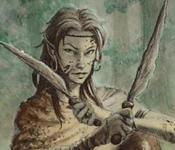
It’s the first game in our review series for Onslaught, and Jimi joins me at the table for the opening clash. In my corner are the Elves and Beasts of Devastation. In hers? The Black and White Clerics of Ivory Doom. Only one of our two decks will live up to its name this evening- which shall it be?
Onslaught: Devastation Review (Part 1 of 2)
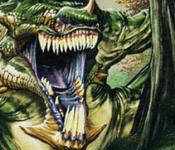
When looking at the scope and history of Magic: the Gathering sets, we tend to distill them down to their core essences. This is frequently summed up as the phrase “X matters,” where X is a card type. Zendikar, for instance, was “land matters,” while Scars of Mirrodin obviously was “artifacts matter.” Given the structure of the game, though, the one card type you seldom see inserted in this construction is “creatures matter.” The reason for this is obvious- in Magic, creatures always matter. In actual fact, however, there are sets that fall into the “creatures matter” classification, though given the default prominence creatures hold in the game it’s taken one level further. It’s not so much that creatures matter, so much as creature types matter. These are called “tribal” sets.

Betrayers of Kamigawa: Spiritcraft Review (Part 2 of 2)
It’s our last visit to the world of Kamigawa for awhile, and we’re giving the Spirits their due. With Spiritcraft, the most tribal of the four Theme Decks from Betrayers gets its moment in the sun. Facing me at the table is Sam, ready with the Rat-like Nezumi and their Ninja and Ronin. Can the Spirits muster the mystical might to send the vermin back to the swamp?

Betrayers of Kamigawa: Spiritcraft Review (Part 1 of 2)
When it comes to tribal decks, you don’t typically see one following right after another in the progression of a block. In the game’s first tribal block, 2002’s Onslaught, the inaugural tribes honoured by anchoring their own Theme Deck were Soldiers, Clerics, Illusions, and Beasts. Thus a few months later, when the follow-up Legions hit the shelves, these four tribes hit the bench and allowed a new slate of four to take center stage: Elves, Slivers, Zombies, and the quasi-tribe morphs.

Betrayers of Kamigawa: Dark Devotion Review (Part 2 of 2)
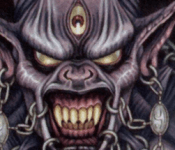
While the war against the Spirit world rages, the Ogres in their mountain homes have been making diabolic pacts with the Oni, and Dark Devotion shows just what they’ve been up to. Has the power been worth the price? There’s only one way to find out as I pit them against Jimi’s Ninja of Ninjutsu.
Betrayers of Kamigawa: Dark Devotion Review (Part 1 of 2)
Shards of Alara, released in 2008, introduced us to a world that had been riven into five self-contained dimensional fragments, each characterised both by the prevalence of one colour of mana and its allies, as well as the complete absence of its enemy colours. The designers and creative team had to ask themselves what each of these five “worlds in a bubble” would look like, and one of the ways they chose to do this was through unique mechanical identity. Bant, the White shard, was given the exalted mechanic, designed to represent their honourable way of single combat. Fiery, primordial Jund had devour, which showed the food chain at work in that dangerous land. Unearth was the plaything of the necromancers and demons of Grixis, a desolate shard of endless fields of bone and ash.
As for the other two, however, that’s a little less simple.
Betrayers of Kamigawa: Rats’ Nest Review (Part 2 of 2)
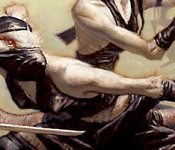
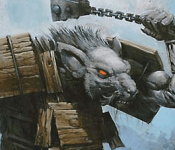
You might have noticed, but Jimi has been out of commission on the site for a wee while now, a result of her recent back surgery which has left her unable to comfortably sit in seat for any length of time. With extraordinary determination, however, she’s been making some equally extraordinary progress, and although it took us a few days to do it, she managed to grab a deck and join me at the table for a match. Meeting my Nezumi at the table was Jimi’s army of Oni and Ogres, the denizens of Dark Devotion.
Betrayers of Kamigawa: Rats’ Nest Review (Part 1 of 2)
As relayed in our previous review (Ninutsu), there was a steep and immediate drop-off in tropes and conceptions about medieval Japanese history and mythology after the most obvious two- Samurai and Ninja. This wasn’t necessarily all downside; instead, it meant that there was a great deal of “ideaspace” for Creative to fill, and Magic’s players were treated to a world filled with Spirits that had suddenly and inexplicable turned on their one-time moral cohabitants. For all the criticism of the set overall- typically focused on either a) power level, or b) card names hard to grasp for Occidental ears- one could hardly argue that the narrative itself wasn’t intriguing and compelling. Mechanically, though, Betrayers of Kamigawa couldn’t help but look a bit thin.


 Ertai's Lament