

Mirrodin Besieged: Battle Cries (Part 2 of 2)

One of the things we really get to enjoy about our playtesting is being able to experience a deck from both sides of the table. When I played Doom Inevitable, I didn’t feel a lot of power underneath it. There was potential, but from the pilot’s perspective it felt rather fragile and constantly threatened. Tonight I played against it instead, with Jimi as my opponent and me steering Battle Cries, and it couldn’t have felt more different. Doom Inevitable was… well, annoying. Hard to get through on after the first 10 points of damage, nettlesome with the -1/-1 counters which my creatures were particularly vulnerable, and requiring me to really have to scheme to orchestrate a win. After our three games were over, I thanked Jimi for the match. “It wasn’t fun,” I said with a grin, “but it was satisfying.”
Here are the notes from the match, and perhaps you’ll see what I mean.

Mirrodin Besieged: Battle Cries Review (Part 1 of 2)
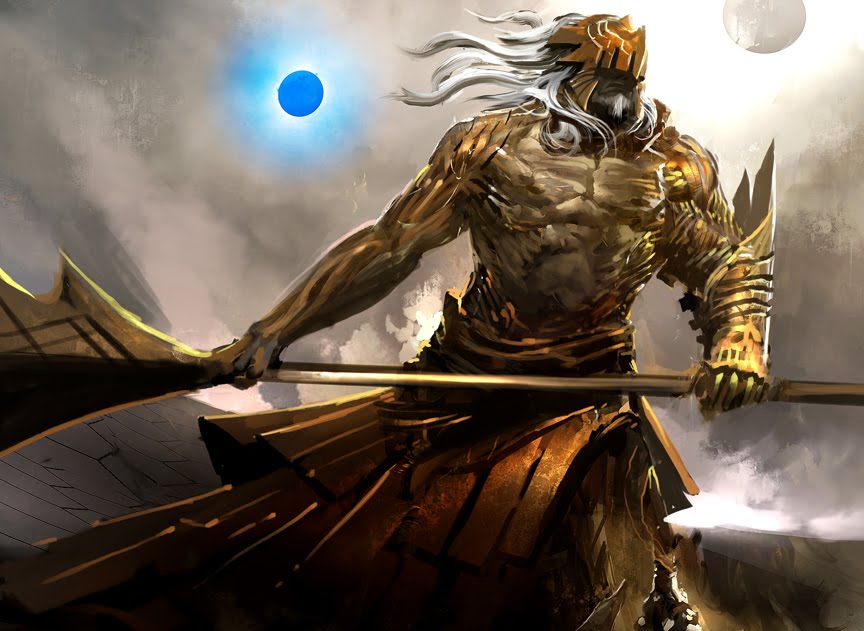
With subtlety and subterfuge cast aside, the forces of Mirrodin are now engaged in open warfare with the Phyrexian infestation that had festered unseen in its core. And while the Phyrexians have genetically engineered living germs to animate their gruesome artifact weaponry, the Mirrans have found the power to inspire and rally their forces on the battlefield. To defend their homes, their lives, and indeed their very existence, they harness the power of the battle cry, as represented in the second Mirran intro deck, the imaginitively-named Battle Cries.
Unlike Mirromancy, Battle Cries is cut from a far more traditional mold with regards to its composition, boasting a 23/13 split in favour of creatures. When you factor in that nearly half of the noncreature spells are actually alternate ways to summon creatures, the picture that emerges is very clear. This is a deck that wants to hit in the red zone, and hit hard.
The battle cry mechanic has been engineered to enable this. Quite simply, whenever a creature with the keyword attacks, all its fellows who are attacking alongside get +1/+0 until the end of turn. Multiple instances of battle cry do stack, so it doesn’t take much to get a powerful strike out of even the smallest of creatures. Today we’ll be examining this mechanic, and seeing how the deck has been built to support it.
Mirrodin Besieged: Doom Inevitable Review (Part 2 of 2)
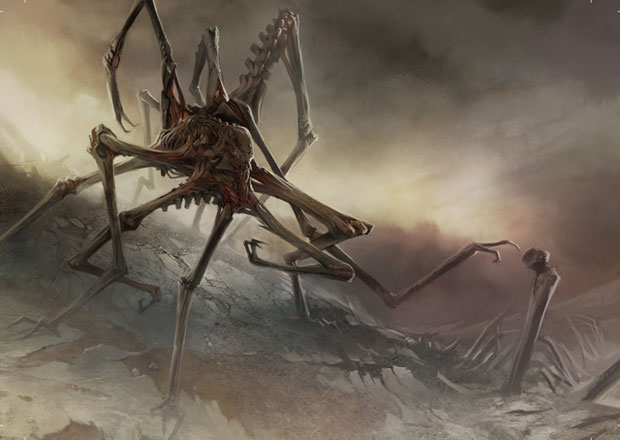
Okay, we’ll start with the obvious. If you can’t get this out of your head when you think of the deck’s title, you’re not alone, because when we sat down to put the deck though its paces we couldn’t either. That aside, Jimi selected the new Mirran Boros construct Battle Cries to put up against Doom Inevitable, and we quickly got down to business. The question we were looking to answer was to see how effective Doom is in surviving the early game and buying itself time to establish board presence. This was the big weakness of it’s spiritual predecessor, Scars of Mirrodin’s Deadspread. Still, Doom seemed to have a lot going for it in our deck analysis. But how would it stand up in an actual game?
We gave it three passes, and here are our notes.
Mirrodin Besieged: Doom Inevitable Review (Part 1 of 2)
One of the primary functions of intro decks is to serve as a showcase for the themes and mechanics of their respective set. They work best when they’re not only fun to play, well-balanced, and reasonably competitive, but also when they give you a good idea of what the set is about. In today’s Standard environment, Wizards has experienced mixed success. Zendikar’s decks were a severe disappointment. When development could summarise the set in three words, “Maps, Traps, and Chaps” (better known as Quests, Traps, and Allies), yet the slate of intro decks virtually ignored all but the latter, there’s a puzzling disconnect between the decks and their set.
Worldwake’s decks were solid enough, although the Quest and Trap deck never materialised, but things took an odd turn in Rise of the Eldrazi. Almost as if they were overcompensating, Wizards built and entire deck around the Totem Armor mechanic, a device which probably wasn’t significant enough to warrant its own standalone deck. To make things worse, Totem Power was very underwhelming, presenting a motley collection of uninspired creatures to stick your Totem Armors on. Although every mechanic deserves its turn on the catwalk, perhaps not every one deserves its own show.
Ertai’s Meddling: Metalcraft (Scars of Mirrodin)
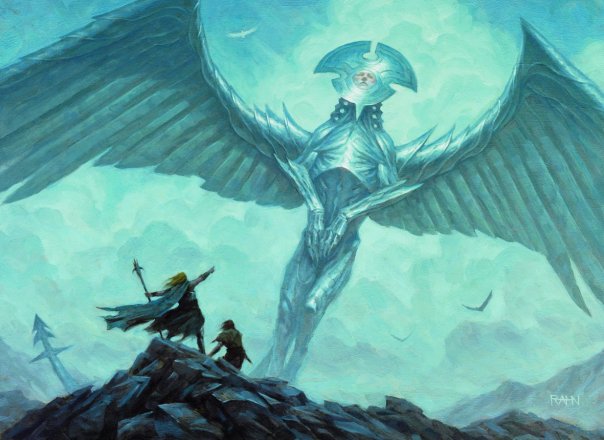
At last, we are proud to present our final Scars of Mirrodin installment of Ertai’s Meddling, the mighty Blue/Red Metalcraft. For those of you who have recently joined us, the Meddling series is where we take an intro deck and fine-tune it. We remove that which isn’t working, add in a few things that might work better, and at the end of the piece have a shiny new upgraded version of what we began with. Of course, as Mark Rosewater so often says, “restrictions breed creativity,” so where would we be if not for a few restrictions? Ertai’s Meddling has two, we call them the “rules” and here they are:

Why these rules in particular? Two reasons. The first is that we want to preserve the flavour and character of the intro deck. If we broke it open to the full spectrum of cards, we’d end up with a much more competitive deck, sure, but one fairly far away from what we started with. Second, we want these decks to be affordable. Stuffing in a fistful of rares and mythics might work for some, but it hardly is the norm for any number of reasons. We want folks to be able to grab their box or binder, pull out their intro deck, and get to work with the cards they may already have lying about!
Mirrodin Besieged: Mirromancy Review (Part 2 of 2)
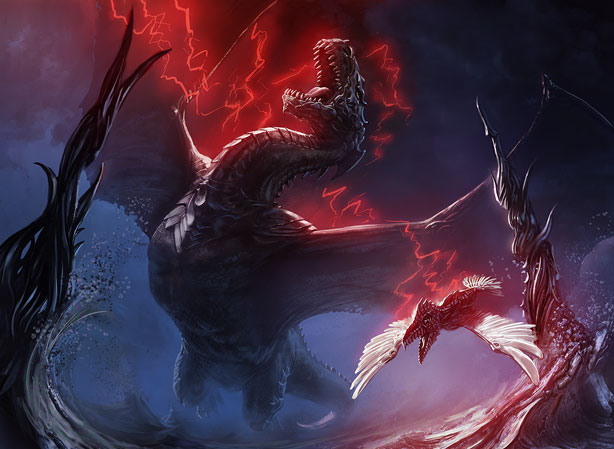
And we’re off! The first playtest for the new Mirrodin Besieged set, and Jimi’s ready for battle behind Path of Blight. In our initial review I found myself quite taken with the design of Mirromancy, but of course only time and experience would tell whether or not it was cohesively designed, or an assemblage of cards more aspirational than functional. Here are the notes from our opening clash.
The Rotters Don’t Stand a Chance: JayBoosh at the Prerelease
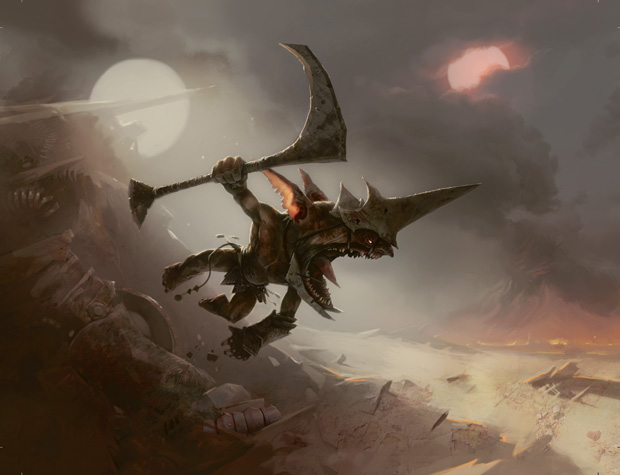
Best known for his outsize personality on The Eh? Team Podcast, Jay “JayBoosh” Tuharsky has been a longstanding reader and friend of the Lament. On today’s guest piece, he decided to share his thoughts and experiences from the Mirrodin Besieged prerelease weekend and thoughts on some of the new cards.
For those of you that dont know me, why the hell dont you know me? Whats wrong with you? My name is Jay, I’m part of a great Calgary Magic community, and an awesome podcast (the Eh Team!). I have been proclaimed the Limited Champion (Ed. note: *cough* casual flight *cough*), and I’ve been known to voice my opinion without filter. Today I wanted to show my support for one of my favorite MTG websites (this one!) and give you guys some insight on how my prerelease experience went.
As a quick preface, I wanted to mention that I went Mirran both days. There is one simple reason for this: consistancy. I am in favor of Phyrexia winning (who cheered for Luke Skywalker anyway?) and yes, im aware that the “power” of the Phyrexian packs was “higher” or “better”. That being said, i am in no way in favor of playing an all in or nothing format in limited. The format is frustrating enough as it is, why would i pay 60 dollars (30 each day) to potentially open a pile of unplayable crap? I personally know more than enough people that can attest to this being how their prerelease went, needless to say they didnt have any “fun.”
Mirrodin Besieged: Mirromancy Review (Part 1 of 2)
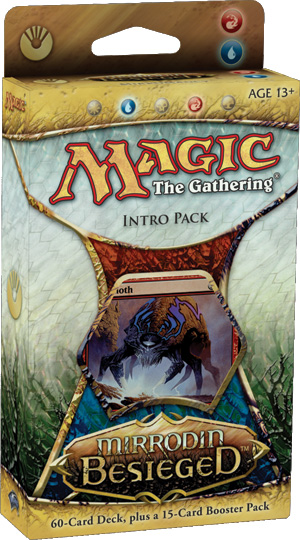
One of the landmark early theme decks released for 1998’s Stronghold was so staggeringly different from the precon decks of today that it’s almost hard to imagine a deck like it being produced for the modern game. The Sparkler was a Red/Blue deck best remembered for one defining characteristic- within its box you found a Mogg Fanatic, a Wall of Tears, a Wall of Razors… and nothing more. A grand total of three creatures. Of course, that left plenty of room for the burn (Lightning Blast, Shock), countermagic (Power Sink, Spell Blast) and general chicanery (Reins of Power, Intruder Alarm) and everything else. It was a bold and daring move, and created a very memorable and exciting deck.
It’s difficult to say whether or not you could get away with such a departure form the norm in today’s environment. Creatures in particular have come a long way since Tempest/Stronghold, and The Sparkler would certainly be under noticeably more pressure from the beefier modern beater. Most preconstructed decks have fallen into the familiar, comforting pattern of creature base with noncreature support. This formula is so entrenched in design that when a deck comes along that challenges it- even slightly- it’s a genuine occasion.
ManaNation Spoils Mirrodin Besieged Intro Decks
In case you missed it, ManaNation.com has published the full lists of all four intro decks for Mirrodin Besieged. You can check them out here!
Ertai’s Lament reviews of the decks will begin on 02 February.
Ertai’s Meddling: Deadspread (Scars of Mirrodin)

Thank you for joining us today as we release the next installment of the ever-popular Ertai’s Meddling series! Today we’re putting Scars of Mirrodin’s Deadspread firmly in our sights, and seeing if we can’t salvage what is a promising mechanic from the somewhat mediocre intro deck it’s been given. As ever we’ll be invoking the rules of Ertai’s Meddling, to make sure that our finished product is something fun and easily obtainable for everyone. That means:
Deadspread was the showcase deck for the new Proliferate mechanic, and had a lot of promise. Get some conters on the board, proliferate like crazy and finish off your decimated opponent. At least, that was the plan! As you might expect, the execution was perhaps a little shy of the mark.
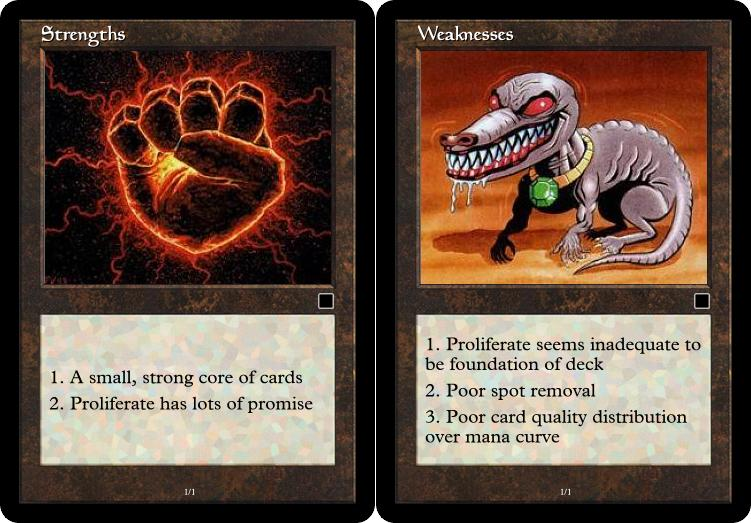
So as we begin, what do we have to work with? Here are the strengths and weaknesses we identified in our analysis and playtesting of the deck:
Here, too, are the raw materials that we have to begin with:

For this Meddling, we’ll be making one version of the deck. Frequently Meddlings in the past have made an improved version of the deck, then used its components to make a mono-coloured variant. This won’t work well for Deadspread– as the first set in a new block, it’s tools aren’t fully developed yet, and we need all the Proliferate we can get. A second deck could be made that would abuse all the charge-counter artifacts we have to play with, but for today’s purposes we want to arrive at a very tightly-focused proliferate deck that makes the mechanic work.


 Ertai's Lament