

Archenemy: Trample Civilization Underfoot (Part 1 of 2)

Halfway through Archenemy, we’ve assembled a doomsday machine and brought about the undead apocalypse, but one could not be faulted for wondering… what options are there for the more primal-minded? The diabolical, mad-as-a-hatter misanthrope who’d like nothing more than to see cities crumble, roads fall to ruin and fields go to seed?
Well wonder no more, friend, have we got the package for you! 60 cards which would make the Dominarian version of the Earth Liberation Front proud, we have Trample Civilization Underfoot!
Coming as a surprise to no-one, Trample is the most creature-heavy of the four Archenemy decks, possessing only 13 noncreature spells. That said, it’s also a surprisingly well-rounded deck with some intriguing synergies.
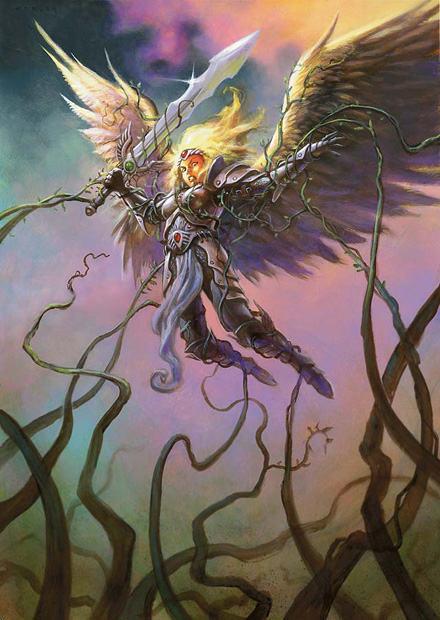
Beasts of the Wood
Let’s start with the critters.
The first thing you’ll note is that the deck has a strong beater focus. Every creature in the deck is either Green or multicolour/hybrid, and while there are a number of utility creatures packed in here, Trample seems to have a soft spot reserved for utility critters that can also deliver a beating.
It also gives you a number of tools geared towards ramping up your mana base, a Green specialty, all of which have a body attached to them- no Rampant Growths or Harrows here! Two Walls of Roots act as supplemental mana generators while blunting an early creature rush. A pair of Sakura-Tribe Elders fetch lands, and there’s the token mana dork- in this case, a Leaf Gilder.
Moving past the two-drops, the three-drop area are also similarly focused, but with a twist. The four ramp-creatures in this range have been selected for versatility as much as utility, for in them you get a choice. A pair of Fertilids ask you: what do you need more, a 3/3 body or some lands? The two Yavimaya Dryads offer a similar decision: do you want the Forest they bring with them for mana production? Or would you rather place it under your opponent’s control so that their Forestwalk is guaranteed to matter?
Importantly, Trample tends to favour adding resources in the form of lands versus mana dorks. Indeed, the deck notably sports no one-drop critters, as if telling you immediately to gear up for the long haul as it gives you the tools to make it pay off.
And pay off it does.

Then the Bough Breaks
Upon closer inspection, Trample becomes quite a bit subtler than the general Green strategy of Ramp Up, Cast Fatties, Smash Face. That option’s certainly there, of course, well represented by the Krosan Tusker (who further adds to the land ramp with his Cycling+Basic Land ability); a Pale Recluse (which landcycles too); the stalwart Molimo, Maro-Sorcerer (fresh from pulling duty in the Teeth of the Predator); the Feral Hydra; and Kamahl, Fist of Krosa (who can animate your land and cast an Overrun every turn until your enemy is just a smudge on the forest floor). An impressive list on its own, let’s now turn to the other synergistic win condition the deck offers.
To players who know and love the Avenger of Zendikar and/or are well familiar with the strategy of taking a bunch of free little things, making them bigger, and swarming in for the kill, Trample will seem like deja-vu all over again. Rather than Plant tokens, however, Trample looks to get there with those Fallen Empires favourites, the lowly Saprolings.
The Selesnya Guildmage acts as a splendid mana sink to pop out the little buggers. A Thelonite Hermit not only can conjure up a quartet of them, but acts as a Lord (giving them all +1/+1). A friend to EDH players everywhere, the deck packs in three Legends, and the last one- Verdeloth the Ancient– is the keystone of the Saproling stratagem, acting as both X-many Saproling generator as well as a second Lord. Finally, Vitu-Ghazi, the City-Tree is an alternate- and harder to eliminate- token generator. If you can’t get there with Big Dumb Beats ™, Trample sets you up for success nonetheless by giving you the swarm option (bolstered by tricks like Kamahl’s Overrun and Shinen of Life’s Roar clearing a path).
And Now, the Best of the Rest
One might reasonably expect the usual suite of Green combat tricks and throwaways to populate the non-creature spells, but here the deck’s designers appear to have been rather canny about trying to shore up most of Green’s weaknesses (for indeed, Trample Civilization Underfoot only really splashes White for utility).
There are answers to flying creatures in the form of Spider Umbra and the M11 “preview card” Plummet, in addition to the Pale Recluse. But more than that, there’s some very solid spot removal in here as well. A single Path to Exile and a pair of Oblivion Rings– top-tier Standard cards all- give Green some very real answers to the customary problems of blockers and- yes- even enemy Planeswalkers.
For those decks relying on them. there’s plenty of artifact and enchantment hate as well. The O-Rings, Wax//Wane, Gleeful Sabotage, and even a pair of Wickerbough Elders amongst the beaters. Add a splash of creature enhancement (the pesky, cockroach-like Rancor, Armadillo Cloak), a wee dram of utility (Primal Command, Harmonize), and- alas- a couple subpar options (Heroes’ Reunion, Fog) round out the list.

Land Ho!
As an added bonus, players perhaps looking for some nonbasic lands for their cube will appreciate the nine this deck is populated with. These range from simple Commons such as Secluded Steppe, Tranquil Thicket, and the slightly-out-of-place Khalni Garden; to mana-fixers and the truly unusual (Graypelt Refuge, Krosan Verge, Nantuko Monastery, Llanowar Reborn); and even to a Rare (Mosswort Bridge). It was a nice touch to see the deck not just come with a string of basic lands and a couple bland “flavour lands.”
All in all, Trample has a very solid feel to it. It’s well-curved, where other Green precons can take on a bit of a “gutshot” feel (here’s some weenies and some fatties, you’ll need to just grip and hold on in between), and having some flexibility with your creature strategy is a welcome break from Big Dumb Beats ™. That it’s a nice collection of cards with a smattering of Lands and Legends is added gravy. It does seem that Wizards has begun keeping an eye out for its EDH community as well, making preconstructed decks have value even when broken down into raw cards.
But having torn the deck apart, the question now becomes… how does it play? Does it give you enough tools to stabilise and begin to ramp? Is there an appreciable impact in basically yielding the first turn every game, having no turn-1 play, or can it make up the lost momentum through speed and size?
Thanks for joining us on the dissection. Come on back in two days’ time, and we’ll have the answer!
Archenemy: Assemble the Doomsday Machine (Part 2 of 2)

Welcome back to our Archenemy reviews on Ertai’s Lament! When you last left us, we’d disassembled the Doomsday Machine, and found it a delightfully intricate set of gears and bolts ready to help you take over the world! Eager to put it through it’s paces, I enlisted the help of an equally-eager Sam to pilot Scorch the World With Dragonfire, and see how it held up. With both decks designed with their respective Schemes in mind, it seemed like a fair matchup with both of them having to do without (a bit like subtracting x from both sides of an equation).
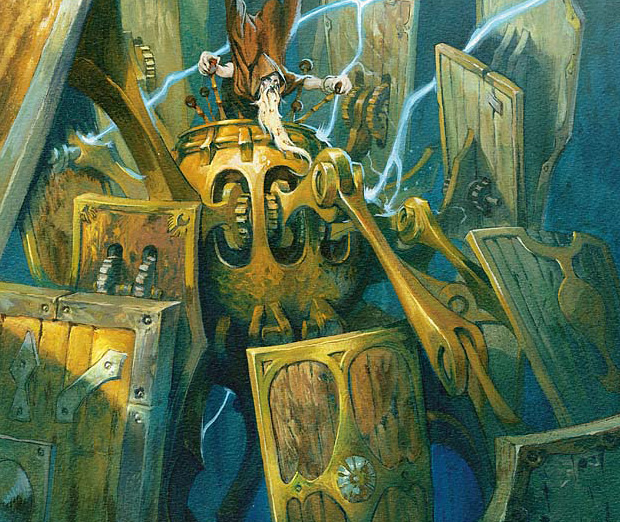
Game One
The first game starts out slowly. For me, at least. By turn 4 I’ve managed only an Everflowing Chalice (kicked at the sweet spot- twice) and a spot of mana fixing with a Terramorphic Expanse. Sam, meanwhile, has dropped some fixing of her own- a Gruul Signet– and a Taurean Mauler for an early threat. Sam, who is on the play, starts turn 5 with Fires of Yavimaya.
Thanks to the Chalice, though, I’m able to deploy the Duplicant a turn early, taking care of her threat. Her turn 6 replacement, a Skirk Commando, isn’t near as threatening, and the game begins to pivot as I put down a Fieldmist Borderpost and Master Transmuter.
Sam again looks to threaten next turn, when she summons a Chameleon Colossus, which swings in thanks to the Fires of Yavimaya granting it Haste. I’m down to 11 life with Sam at 20, but I’m liking my board development and have an answer in my hand to the pesky Colossus. I play a Mistvein Borderpost and pass turn.
Turn 8 sees Sam playing a Thran Dynamo. Sam’s been a little lean on the land drops, and this promises to be a help. She swings in again confidently with the Colossus, but it’s time for me to go to work.
I use the Master Transmuter to return the Everflowing Chalice to my hand, and replace it with a free Sundering Titan, which makes short work of her attacking beater. Once my turn rolles around, I exploit the delightful synergy the Chalice offers to the Transmuter, playing it unkicked for free, using the Transmuter to return it to my hand, and playing an Unbender Tine for free. Net mana savings: 3. The Titan continues to make itself known by rumbling into the red zone for 7. Sam’s now at a more reasonable 13, while I’ve stabilised at 11.
The next couple of turns see Sam throwing out chump blockers in the form of a Kilnmouth Dragon, a Furnace Whelp, and a Morphed critter. My Unmake and pair of Agony Warps clear the way and the Titan seals her fate.
Game Two
One piece of advice I often give to newer players is, “beware the deck with too many moving parts.” Even the top-level pros will admit to making multiple mistakes each game, and having too many may-triggers in play can put you at disadvantage with natural human forgetfulness. I could have been given no better reminder of this than in game two.
It started quietly enough, with Sam playing an early Dragon Fodder and Dragonspeaker Shaman, while I laid out a Sun Droplet and Mistvein Borderpost. With Sam again on the play, turn 4 leads off with another Morph creature, while I shore up my position with an Aether Spellbomb and Synod Centurion.
Things take a turn for the worse on turn 5, however, when Sam’s Shaman enables her to cast Ryusei, the Falling Star. Trouble! She’s been coming in with her Goblin tokens and Morphed critter already, and thanks to some drip healing from the Drop, I’m still at 15.
I follow up the Centurion with a Metallurgeon for support, then Sam meets that with the Fires of Yavimaya again before swinging in with the dragon for another 5. I see board control start to slip from my grasp.
Turn 7, Sam plays another Dragon Fodder, looking to stall I trigger the Spellbomb to bounce the dragon. And drip, drip, drip each turn, I’m getting 1 life back from the Drop. I go in with my Centurion and Sam makes an even swap for her four Goblin tokens. I’m able to regenerate the Centurion with the Metallurgeon, but it’s set me back- I’m just the one mana shy of a Sundering Titan. Oh well, next turn it seems…
Sam goes all in the next turn, and I Batwing Brume. Things are looking increasingly dire as Sam and I begin trading blows back and forth, her flyer and my beater. But something small and unnoticed, but eventually critical happens on that eighth turn.
I forget the may trigger on Sun Droplet. Although I catch myself the next turn, I would end up paying quite the price for it.
The rest of the game furiously unfolds. Chandra’s Outrage smokes my Centurion, with me tapped out from casting the Titan. I play another Aether Spellbomb, desperately buying time. A nearly useless Unbender Tine sits out on the battlefield. I’m down to six life, Sam at seven. She brings out a Two-Headed Dragon and comes in with the pair of wyrms. I sacrifice the Spellbomb, bouncing Ryusei, but she gets lethal by sacrificing Fires of Yavimaya for her unblocked Dragon.
The masochist in me compels my hand to reach over to my library and see what I would have drawn next turn, a turn I would have had had I remembered that one turn’s Sun Droplet.
Magister Sphinx. Of course.
Game Three
If game two was a heartbreaker, game three would turn out to be infuriatingly frustrating, and all thanks to one single card.
With both our decks seemingly keyed to early buildup, the first spell cast is Sam’s Dragonspeaker Shaman at the end of turn 3. I groan, but my dread is mitigated by the delight in breaking out an early Skullcage. With a full grip, the ‘Cage goes right to work on Sam, and would for the entire game, a ten-turn timer.
By turn 5, I realise that I’m not going to get very far without a Swamp, as I’ve had consistent drops but all Islands and Plains. I turn some land sideways and trot out the Sorcerer’s Strongbox. Sam’s play? Another early dragon, this one again of the Two-Headed variety.
With the Unmake in grip but with only two Plains out, I’m gagging for the Swamp all the more. I tap two and trigger the Strongbox. I miss the flip. Pass turn.
Next out for Sam is the Taurean Mauler, and her Dragon chews on my leg for four. Me, I’m flipping a coin again. And failing. I’ve now paid eight mana for a card which has affected my board position exactly not one bit, all in the vain hopes of landing a Swamp and turning the tide.
Turn 8, “magic” happens as I luck into a hit on the Strongbox, drawing three cards. Total cost is now 10 mana, and the Memnarch I draw looks like too little, too late. I console myself with a somewhat useless Leonin Abunas.
Desperate for a blocker, I cast a Sanctum Gargoyle, and almost pass on returning the Strongbox to my hand out of spite. Sam, meanwhile, has played Gathan Raiders and keeps attacking (one turn nullified from Batwing Brume).
On turn 9 I draw into my third Plains, and am able to Unmake the Dragon. Next turn, I abandon any pretense of dignity and cast a Dreamstone Hedron with reckless abandon, paying the extra mana to sacrifice it for three cards and tapping myself out in the process. In my hand are Memnarch, Architects of Will and a Magister Sphinx, begging to come off the bench, all needing either just one more mana, or one Black mana (or both).
Chandra’s Outrage blasts the Gargoyle right out of the sky. While we’re even at 6 life (Sam’s damage entitely from the Skullcage whittling away at her, turn after turn), I have no threats and Sam does. The Gargoyle was the last bulwark against her aggression, and when it falls, so do I.

I See Dead People
There’s a postscript to this game that bears mentioning. As Magic players, we’re all familiar with probability and random chance. It’s why you pack four-of something in a deck rather than one-of and a prayer. Certainly, my loss here could be attributed to the lack of a Swamp, and there is certainly some merit there (though there’s seldom one cause for any loss, or even any win for that matter. The next thing I would revisit in breaking down this game would be my opening draw. Was it questionable? Worth shipping, perhaps? Was I overly optimistic about my chances with it? Was it missing a vital element- in this case, a Black mana source- that I was underestimating the necessity of? So many questions, so many opportunities to improve play).
That said, I believe there is still some value in assessing how a deck does in times of famine as well as times of feast. It’s easy to imagine how your deck runs when it runs well (for instance, if the words “first-turn Dark Ritual” have ever come out of your mouth), but it’s equally vital to see it when it does not.
You see, there’s something of a Shyamalan-style twist ending to game three, in that my tri-colour deck had to make do without Swamps. Sam’s two-colour deck? Not a Forest the entire game.
Some decks can handle it. Some decks can’t. It’s worth bearing in mind the next time you sit down to analyse a deck. If I took away access to an entire colour for the first three turns, what would happen?
The first five turns?
The entire game?
Something to consider.

Final Analysis
Doomsday Machine was a humbling reminder of the need to consider false starts and bad draws when assessing a deck. On first blush, it seemed very strong- well curved, a good assortment of cards and some very nasty synergies. Master Transmuter and Everflowing Chalice, for one, are a very wicked pair if they come out together. But these are preconstructed decks- they don’t optimise any particular card by running lots of multiples. Instead, you have to look at what role a particular card is playing (Ryan Spain of Limited Resources has many times when assessing new sets in the podcast spoken of looking for “analogues” in a new card pool. These shows- all of theirs, really- are well worth the time invested even if you don’t play Limited).
Having seven different mana fixers/accelerants is great, but what happens when you have more than enough mana as it is? These are enabler cards- they are never a solution to anything in and of themselves. Nice to draw them early, the last thing you want to see sometimes when you’ve got a pile of Islands and Plains in front of you is the Azorius Signet.
Likewise Sun Droplet and Unbender Tine… these are two cards I was never particularly happy to draw. The bulk of my ire, though, is reserved for the horrid Sorcerer’s Strongbox. Some people might really enjoy the whimsical sense of adventure they get from “luck” and randomness, but I am not one of those. I much prefer predictability and static costs, so that I can plan my turns accordingly. Chasing after this damnable artifact’s trigger felt nearly the functional equivalent of a snipe hunt (in the card’s defense, the average cost paid for drawing three cards is 7 mana + 1 card. I was just “unlucky,” but then that’s more to my point).
In the end, while Doomsday Machine felt strong under the hood, I wasn’t able to detect it’s streakiness until I played it. When it’s on, as it was in game 1, it’s an artificer’s juggernaut (at times, literally). But there’s enough suboptimal draws available in the deck that stringing together just a few of them can be a real setback and lose you games.
Undoubtedly, the Schemes for Archenemy paper over some of that weakness, buying time to level out the game state, but bereft of those the cracks in the engine block become a little more apparent. Fun, but a bit of a roller-coaster!
Final Grade: 3.0/5.0
Archenemy: Assemble the Doomsday Machine (Part 1 of 2)
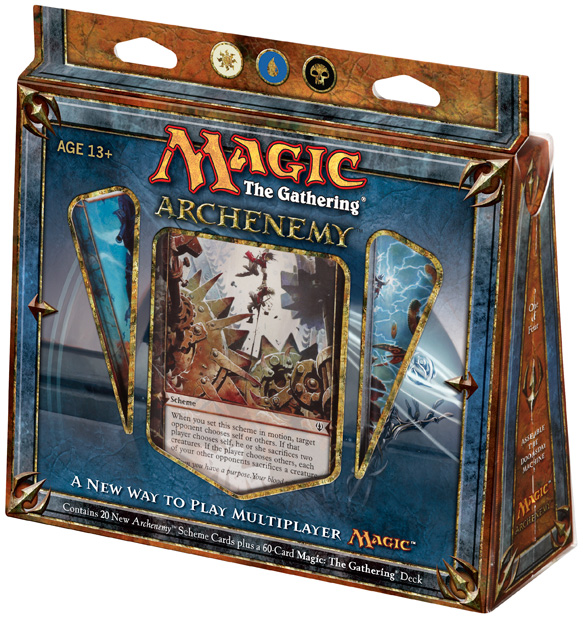
Weclome back to the next installment of Archenemy! The theme of today’s deck- the assembling of a doomsday device- is not only appropriate flavour-wise for the schemes, but also it is a useful metaphor for understanding how the deck works.
In Bring About the Undead Apocalypse, you had a very straightforward deck design. Support a recursion theme with fatties to dump into your graveyard, ways to get them out into play, and removal to clear the path to your opponent. Machine appears much more intricate, with many more moving parts. Gears in the device, if you will.
A Pleasure, I’m Sure
First, let’s get introduced to the beaters of the deck. Doomsday Machine features- by a healthy margin- the lowest creature count of any of the four Archenemy decks. These tend to form two ‘peaks’ on a graphing of the converted mana cost (CMC) of 4 and 7+, which means you won’t be doing much with them before turn 4.
Here we must look, then, at the intricacy of the selection. Most of the creatures here are pulling double-duty, being beaters in and of themselves but also serving a higher purpose. The Metallurgeon regenerates artifcats, while the Ethersworn Shieldmage can drop a surprise combat trick with Flash and turn combat in your favour.
Your artifacts gain a sort of semi-Shroud when the Leonin Abunas hits the table, and should any fall prey to your enemies, a pair of Sanctum Gargoyles are there to fetch them back. Lastly, the Master Transmuter allows for a few nifty tricks to get your more expensive artifacts into play.
Things get even uglier at the higher end of the curve. The Duplicant exiles a critter as it enters play. The Magister Sphinx can play with your opponent’s life total (or boost yours if things grow dire), the Sundering Titan plays with lands and Memnarch, well, he plays with just about anything.

Now for the Devilish Devices
If you looked at the Sundering Titan above and wondered if it had the potential to go horribly wrong, you needn’t worry overmuch. Doomsday Machine is absolutely stuffed with non-land mana sources, a full seven of them! From the colourless (Everflowing Chalice, Dreamstone Hedron) to the coloured (Signets- Dimir and Azorius, Borderposts- Mistvein and Fieldmist, and a lone Obelisk of Esper), you should have more than enough ramp and mana fixing to ensure a steady flow of plays from start to finish.
A handful of utility artifacts (M11’s Sorcerer’s Strongbox, Sun Droplet, and Lightning Greaves are a few to give you an idea) round out the picture. The cogs of this machine are many and varied…
Besides the Abunas, there are only a smattering of non-artifact spells in Doomsday Machine, and these exist mainly in a supporting role. Spin into Myth, Agony Warp, and Unmake provide some removal of key elements in your opponents’ defenses and must be used sparingly. March of the Machines is a particularly nasty “all-in” finisher, animating all of your artifacts and best used as a surprise marshalling of the forces on your turn.
Multiplayer Play?
That said, unlike with Bring About the Undead Apocalypse, there are few options here that become optimised in multiplayer. The last spell, Batwing Brume, is one such card, but the rest tend to be passive effects that just cast a little broader with more players lined up against you (Lodestone Golem, Skullcage, Thunderstaff). That’s not to say that Machine is a weak or ineffective deck, but that if you didn’t know better you could just about be looking at a regular artifact-heavy preconstructed deck, not unlike Planechase’s Metallic Dreams.
The mana base of the deck seems more than adequate when you take into account the various fixing artifacts, and the path to victory seems clear. That said, it doesn’t look as formidable as Undead Apocalypse, and perhaps just a mite too clever for its own good.
But for the real test, we’ll have to see how it performs. Thanks for joining me today as we dissected the deck, come back in two days’ time and we’ll have the writeups ready to see how well it lived up to the notion of “doomsday!”
Archenemy: Bring About the Undead Apocalypse (Part 2 of 2)
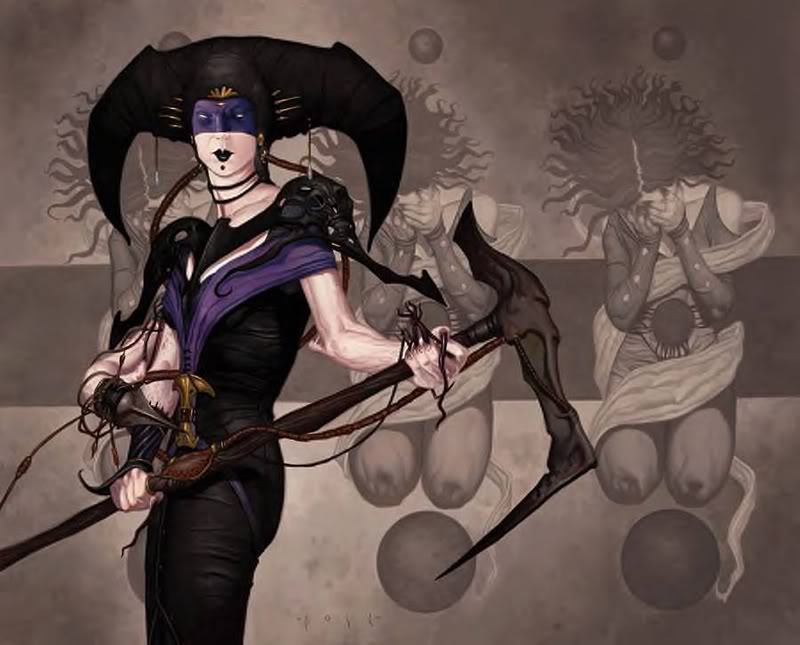
One of my early, sour impressions of the Undead Apocalypse deck was that it- oh the irony!- had a certain recycled feel to it. Early sightings of the Festering Goblin, Twisted Abomination, and Urborg Syphon-Mage harkened back to earlier preconstructed efforts such as the Garruk vs. Liliana Duel Decks and last year’s Planechase deck, Zombie Empire.
It became evident very quickly, however, that this was not the case at all, and that a certain amount of care had gone into the construction of Undead Apocalypse. As noted in our playtest article on the deck, it is structured around a graveyard recursion engine which- when it goes off- can be quite the beast. In this analysis, we’ll be going under the hood, looking at all 60 cards (and not just the ones I happened to draw).
The Dead Walk
Undead Apocalypse is unsurprisingly a creature-heavy deck, but recursive themes tend to warp the traditional assessment of mana-curve. Case in point, this deck packs in a choking eight critters of 6 converted mana cost (CMC) or more. By contrast, there are only an eleven additional beaters at a cheaper cost. But in Undead Apocalypse, this is shrewd deck design. Let’s have a look at the fatties.
Twisted Abomination: Alright, a 5/3 with Regeneration for 6 isn’t hideous, but the Abomination has a nifty little trick in that he Swampcycles. This mitigates the ‘penalty’ incurred for having one of these drawn early. In this deck, pitch it to get a Swamp (which helps in your board development), then when you have resursive spells come online later in the game, you’ve got him sitting in your graveyard just waiting for the coach’s call.
Scion of Darkness: Another brute, he carries an Eldrazi-like CMC of 8. However, like the Abomination, he has a built-in pitch mechanism, as he Cycles for 3. Toss him early for the replacement card, then pull him back later on when it counts.
Avatar of Woe: A true smashmouth beater, the Avatar is a game-ender nearly by herself but with a pricetag to match. She has no way on her own to fall from your hand into your graveyard, but she does have a nifty little incentive package- if there are ten or more creatures total in all graveyards, she only costs  to play. When it’s remembered that Archenemy is a multiplayer format, that incentive becomes all the sweeter!
If You Won’t Go Voluntarily…
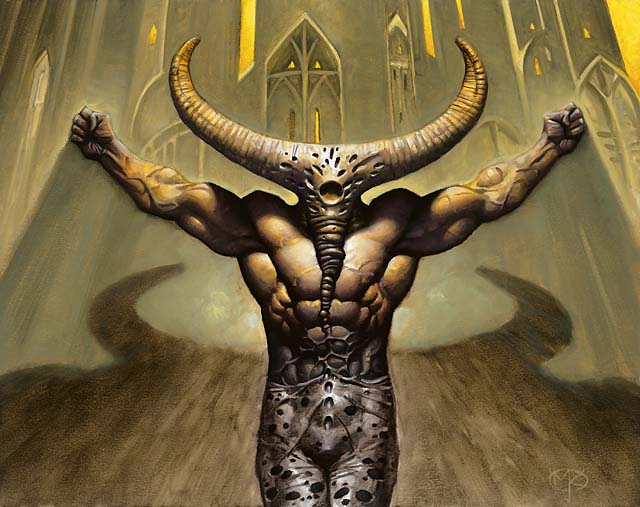
The deck also sports other avenues to push your pals into an early grave. The Corpse Connoisseur drags an ally kicking and screaming from your deck and dumps it unceremoniously into your graveyard when cast (and he has Unearth, so he can do it again later).
The Avatar of Discord turns disadvantage on its head when it comes out, ‘forcing’ you to discard two cards to keep it in play. A 5/3 flyer as early as turn 3 can put some serious pressure on your opponent while filling your graveyard for later enjoyment.
Rakdos Guildmage similarly turns vice into virtue, allowing you to pitch cards to give your opponents’ critters -2/-2. The Urborg Syphon-Mage lets you pitch to gain life.
Lastly, the true standby is Zombie Infestation, an Enchantment whose gifts keep on giving, turn after turn. The 2/2 Zombie token it yields is almost an added bonus.
Between the beaters with Cycling and these options above, Undead Apocalypse virtually ensures that you’re going to be cheating something into play before long.
Waste Not, Want Not
As many ways as there are to shove critters into an early grave for later, the deck offers just as many options for dragging them back out again when the time is right. Zombify is as straightforward as it gets, but for those who like their recursion with a ‘twist,’ Torrent of Souls and Beacon of Unrest are present as well. Reanimate is about as inexpensive as it gets, though care must be taken when paying its blood cost.
Several creatures have ways to pull themselves out of the tomb for another shout. Dregscape Zombie, Corpse Conoisseur, and Extractor Demon all have Unearth, while the M11 “preview card” Reassembling Skeleton’s unique mechanic makes it the perfect card to pitch.
And when all else fails or you run out of recursion, Cemetery Reaper and Makeshift Mannequin ensure that little needs be wasted.
But Wait, There’s More
Undead Apocalypse isn’t done there. It gives you the tools to a creature-based victory, and to clear the way to your opponent it also packs a robust removal suite. A pair of Terminates, an Inferno Trap and a Bituminous Blast are all solid spot removers, with the Cascade of the Bit Blast a bit hit-or-miss in the deck (Cascading into a Reanimate when the only critters in your graveyard are a Festering Goblin and an Artisan of Kozilek can make for a rather difficult decision). When you can, pay more for the fixed-damage cards like the Trap and Blast over the Terminates, in case something hits the table later that’s carrying more toughness than 4. You’ll be glad you did.
There’s a moderate sweeper option in Infest, and a potential three-for-one in Incremental Blight (though I’ve found this difficult to reach its full potential, even a two-for-one is solid. Your mileage may vary).
Coming Together
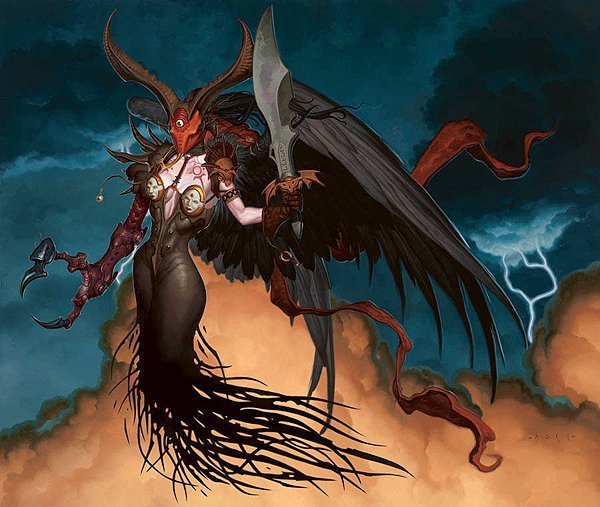
The last thing to look at is how the deck plays in its format, namely multiplayer. Although it has proven valuable to pilot the deck to a one-on-one duel to see how it flows in actual play, it’s clear that the full, dark majesty of the deck comes out when there is more than one victim at the table. Indeed, a great many of the cards in Undead Apocalypse have been obviously selected with this in mind.
Infest sweeps more; Reanimate, Scion of Darkness and Cemetery Reaper have more options (remember, the Reaper can recycle from other graveyards as well); Avatar of Woe is potentially cheaper; and the effects of Infectious Horror and Urborg Syphon-Mage are magnified.
Additionally, included rares Kaervek the Merciless and Extractor Demon are even more filthy the more players there are in play. Kaervek in particular can have a dampening effect when one player realises the spell she’s about to cast could trigger a kill on one of her ally’s best beaters. Delectible!
In Conclusion
Bring About the Undead Apocalypse is a very solidly-constructed deck. It has a strong engine (recursion), plenty of support and a good removal suite to get it through. It doesn’t pack in a lot of utility (there are a pair of Sign in Bloods), but then it really doesn’t need to as so many of the creatures have utility built-in (see: Shriekmaw, the various Mages, etc).
The mana base is solid. It includes the usual string of Swamps and Mountains, a pair of Rakdos Signets and Carnariums. The two Barren Moors give just a pinch of late-game versatility.
Not only that, it’s fun as hell to play. I’m already looking forward to grabbing a few more victims and parking a Scheme deck in front of this one.
Great concept, solid design and construction and a very enjoyable card pool make this an easy pickup. The fact that there are eight rares (as compared to the Duels of the Planeswalker decks which packed six, and the 41-card “Intro Packs” with three- including the random one in the booster pack in each count) makes it an even stronger value.
FINAL GRADE: 4.5/5
Archenemy: Bring About the Undead Apocalypse (Part 1 of 2)

At last, would-be megalomaniacs and world-shattering planeswalkers have cause to rejoice, for Archenemy has released!
Archenemy, the spiritual successor to last year’s Planechase, is a multiplayer variant of Magic that pits one player (the “archenemy”) against a number of other players all working together as a team to bring him or her down. An oversize deck of “Scheme” cards and double starting life help to even the odds for the Archenemy, and each of the four sets contains a 60-card preconstructed deck designed to work in tandem with a particular set of Schemes. Planechase was much the same way- the Planes included in each set worked synergistically with the precon deck.
We begin our analysis of Archenemy with a few caveats. First, although I have every certainty that Archenemy- as it is meant to be played- is a casual blast, Ertai’s Lament is more concerned with the preconstructed decks themsevles rather than the Schemes. So the Schemes- fun as they are- for now stay in the box.
Second, because deck testing works best when facing only one opponent, testing runs with the decks will be one-on-one, with my opponent piloting another Archenemy deck. For this test, I’m working the undead angle, while Jimi has selected the Esper-coloured Assembling the Doomsday Machine.
The idea is to see how the decks themselves rate, outside of the gimmick of the Schemes. To find out, we brewed a pot of tea and sat down at the table for the customary three-game series.
As is further custom, we started with an opening-game “friendly” match to acquaint ourselves with the decks, and Jimi’s Doomsday Machine smokes my zombies. Feeling like I’ve my work cut out for me, we begin the matches.

Game One
I open with a Barren Moor, getting the tap-land out of the way early, but Jimi’s got a play as she drops a Plains and an Aether Spellbomb. Not to be outdone with the clever artifacts, I play a turn 2 Rakdos Signet after dropping a Mountain, then Sign in Blood the following turn to dredge up a few more options.
Still quiet on the other side of the table as I play an Infectious Horror on turn 4, but Jimi has a reply, smirking as the Leonin Abunas touches down.
I look to clear out some weenies from my hand when on my next turn I cast the M11-preview card Reassembling Skeleton alongside a Rakdos Guildmage. Five turns in, and we’re still both at 20. Jimi’s reply is an Unbender Tine.
The real threat comes down on turn 6, when I trot out the Twisted Abomination. This card seems to be a Wizards precon all-star, I know of two special products off the top of my head he’s been seen in (Liliana vs. Garruk Duel Decks, Planechase’s Zombie Empire deck). Although I’m not impressed from a sense of novelty, there’s little denying he gets the job done. When Jimi’s turn 6 play is merely an Obelisk of Esper, then sacrificing her Spellbomb in hopes of topdecking an answer, I start to look for the easy kill.
The next turn, my Horror, Skeleton and Abomination set off for the red zone, and while the Horror falls to the Abumen it does set up the Bituminous Blast that finishes him off. Predictably, I cascade into rubbish- in this case, a Festering Goblin (another Zombie Empire stalwart).
Now at 11 life, Jimi plays a Sanctum Gargoyle, which allows her to return the Spellbomb and replay it. When I come in with the creature force the next round (including a hsty Goblin token from the Rakdos Guildmage), she wisely sacrifices it for it’s second ability, bouncing the Abomination back to my hand.
It’s only a temporary setback, however, and despite getting lucky by popping the M11 Sorcerer’s Strongbox on the first flip, it’s not enough to stem the tide. Game one goes to the undead.

Game Two
Despite having played two games with the deck, I had not seen much of the recursion engine it had promised. As Jimi would come to find out in this epic matchup, however, it was quite an engine indeed!
It starts innocently enough. Land drops for turn 1, Jimi with a Dimir Signet next round. Still nothing from me even as Jimi lays down a March of the Machines, and I begin to worry. Turn 4, Jimi’s out with a Juggernaut, and my response is a Zombie Infestation.
Zombie Infestation? My first look is one of dismay- two cards for a crappy 2/2 Zombie token? I must be a little tired, though, because it takes a moment to sink in- the value of the card is not what you get out, but what it lets you throw away. And with a Torrent of Souls and Avatar of Woe in grip from the outset, the lightbulb finally flickers to life.
Turn 5 arrives, and while Jimi is shy a lot of artifacts at present, she’s got quite the support network for them as the Leonin Abunas drops from her hand. She swings in with the Juggernaut, and just like that I’m at 15.
Knowing the Abunas has to go before I can spot-remove the Juggernaut, I pitch the Avatar and a Swamp I just drew to the Zombie Infestation, putting a 2/2 token n play, then cast Torrent of Souls. Having paid Red mana in casting it, the Avatar comes back with haste and she immediately taps to slay the Abunas (giving a tapped-out Jimi no chance to bounce the Abunas with the Spellbomb).
Jimi untaps and plays a Sun Droplet, then knowing I don’t have enough mana to hardcast her, she bounces the Avatar back to my hand by sacrificing the Spellbomb. Luckily for me, I’ve a Beacon of Unrest in hand, and I again pitch the Avatar and a land to cheat her into play with graveyard recursion. The second Zombie token teams up with its brother to take down the attacking Juggernaut, and all is well in the world again.
Through the Beacon, the Avatar of Woe again returns to the world on my half of turn 6, Jimi gets out a Lodestone Golem the next turn but the Avatar slays it, too. Not done yet, Jimi lays down a Thunderstaff, but I take advantage of the fact that all her artifacts are also creatures (via March of the Machines) to do a little pruning with Incremental Blight. Off to the graveyard with the Sun Droplet and the Staff, and the now-unimpeded Avatar takes a chunk off her life total.
Jimi’s never quite able to recover. Another Spellbomb bounces the Avatar once again, but thanks to a timely Bog Witch I’ve now got the mana to hardcast her. Which I do. She gets there the next turn.

Game Three
Jimi’s laughing because it’s just her luck she’s getting swept for the writeup games after doing so well in the warm-up. I certainly understand the frustration, but it’s important to note that the outcome of the game is only one of the things I’m looking for when I assess decks, and I’m not much worried about winning or losing. No, what I’m more interested in is how the deck works- what it’s designed to do, and how successfully it manages to do it. Wizards’ preconstructed decks aren’t made by throwing a random assortment of cards together (though in the case of the Jace Beleren Thoughts of the Wind deck that came out a couple weeks ago, I’m not entirely convinced). What cards are they playing, and why? What features are being highlighted? What synergies or avenues to victory are present in a deck?
These are the things I’m really concerned about. Consistent performance, which is more than just the outcome of three games. And if we can have some fun along the way, then great!
Game three has a certain resemblance to game two in miniature. I kick things off with a turn 2 Zombie Infestation, then do little until turn 4’s Dregscape Zombie.
For her part, Jimi manages a Synod Sanctum, a Mistvein Borderpost, and then a turn 5 Synod Centurion.
The Centurion gives me a target for the Bit Blast, and my poor luck with Cascade continues as I fall into an Inferno Trap with the only legal target my own critter (needless to say, I choose not to cast it).
Turn 6 brings Jimi a Master Transmuter, while I produce the far more pedestrian Twisted Abomination. But again slow and steady wins the race as the Abomination begins whittling down her life total. Not quite as sexy as the Avatar of Woe, game three ends much the same- a giant black beater grinding Jimi down.

Impressions
One thing was certain at the end of the match- Bring About the Undead Apocalypse had some great synergies. Game two in particular, with the Avatar of Woe coming into play three times, was a showcase match for the deck. But the other two were much less flashy, and certainly benefitted from some bad draws (particularly game one, where Jimi hit a run of land).
Which game, then, was most representative of what Apocalypse has to offer? Is it a solid engine that hit a couple misfires, or was the recursion-palooza of game two the exception rather than the rule?
Thanks for joining me today as I kick off analysis of Archenemy’s decks for the next two weeks or so, with a new update like clockwork every other day. Please join me again on Friday when we break the deck open and go in search of answers!
Duels of the Planeswalkers: Ears of the Elves (Part 2 of 2)
In the past two weeks (with a slight diversion to examine our friends the Kor a little more closely), Ertai’s Lament has taken you into the minds of five of the preeminent planeswalkers of our time. We examined the Eyes of Shadow of Liliana Vess, solid Black with a discard suite. We looked at the mayhem that is Chandra Nalaar’s Hands of Flame. And we counted the disappointments in the uninspiring Jace Beleren Thoughts of the Wind and Garruk Wildspeaker Teeth of the Predator decks.
Now it is time to crown our winner of the “Best in Series,” Nissa Revane’s Ears of the Elves.
I didn’t start out thinking I would like this particular deck. I don’t much care for Green, and an Elf tribal deck after I recently made an Elf tribal deck didn’t promise to excite. But having taken all five of the Dules of the Planeswalkers decks apart, this one is clearly the best-designed.

The Deck
Ears packs in 21 creatures, and, like Teeth of the Predator, one of it’s non-creature spells is indeed a creature generator (Elvish Promenade). But instead of falling prey to Teeth’s poorly-executed ambition of trying to ramp, Ears follows a swarm approach with a very tight mana curve. Observe:
3x 1 CMC (converted mana cost)
7x 2 CMC
4x 3 CMC
5x 4 CMC
2x 5 CMC
The three one-drops and seven two-drops means that this deck will very seldom falter coming out of the gate, and can be relied upon to exert an early, steady pressure on opponents. The deck still has plenty of midgame options with the seven 4-5 CMC critters, and no expensive cards to act as a dead draw until lategame, a problem that hampered the Garruk deck.
The non-creature cards were splendidly chosen, not a one of them out of place. A trio of Giant Growths give you the option of a combat trick or extra damage to your opponent at the end of the game; some utility in Naturalize and Nature’s Spiral; token generation with the aforementioned Promenade; and best of all, a minor removal suite with three Eyeblight’s Endings and a pair of dual-purpose Essence Drains!
The problem with any weenie/swarm deck is that it tends to exhaust itself by the midgame and if it isn’t close to a breakthrough by then, chances of victory can rapidly diminish. Red Deck Wins and other mono- or mainly-Red decks compensate by having the option of direct burn spells to get there, but Green possesses few such options.
Luckily, Ears has just that midgame state in mind, and provided several tools to help its pilot slog through the red zone and finish off their foe.
Working With What You Have
Tribal decks are often fun because of all of the synergies and interactions between cards that make the whole greater than the sum of its parts. A number of cards in the deck either benefit from or strengthen other cards, allowing the Elvish swarm to ‘punch above its weight’ as the game goes on.
Naturally there’s a “lord” creature in the deck, the Elvish Champion, who gives all Elves +1/+1 (in addition to the situational Forestwalk). But the deck does one better by adding in an Imperious Perfect, who not only gives Elves the same bonus, but (for the easy cost of a single Green mana), taps to add another Elf to the battlefield.
Want even more Elves? The Lys Alana Huntmaster puts one into play every time you cast an Elf spell, which of course you’ll be doing for the remainder of the game quite consistently.
Then, of course, are the cards that care about how many Elves you have in play.

Another Mouth to Feed
The pinnacle card here is the premium foil, Immaculate Magistrate. A 2/2 for three mana (which isn’t great but not terrible, either), she taps to add a number of +1/+1 counters onto one of your creatures equal to the number of Elves you have in play. Simply put, this is one of those “deal with or you die” cards that puts your opponent on a timer.
There are a few other solid Elves in the deck, including a pair of Moonglove Winnowers whose Deathtouch will give an opponent pause for thought. It’s apparent that midgame is endgame for this deck, and it is well-equipped to go that final measure. If tall (a few big Elves with lots of +1/+1 counters) or broad (a large swarm of 1/1’s) won’t do it, the deck’s pair of semi-evasive Elven Riders should do the trick. And of course, the deck’s lone Coat of Arms can just get ridiculous if it comes out.
For an introductory deck, the Ears is surprisingly well-rounded, in in contrast to some of the other Duels of the Planeswalker decks. Even Green’s usual Achilles’ Heel- flying creatures- have answers in either the splashed-Black removal or in Jagged-Scar Archers, while avoiding the usual conditional problems that can plague Green’s anti-flying options (dead draws if you foe isn’t playing many flying critters).
Final Thoughts
If you’re going to buy just one of these Duels decks, I’d recommend this one- although a couple others are decent, it just gets worse from here. Well-designed, Ears gives the impression that the designers put the emphasis on making a deck that can hold its own rather than just a deck for “new players,” although the deck is certainly straightforward enough for any skill level to pilot. There seems to be a bit of a tension in making beginner products: you want them easy enough to grasp quickly so the new player won’t get turned off by frustration, but by the same token you want them fun enough to make that new player want to play a second game, and a third, and…
Each of the five Duels of the Planeswalker decks pull off at least that baseline ambition, although to varying degrees of success. A new player will probably enjoy them all. But whereas I would expect that something like the Jace Thoughts of the Wind deck would be retired or broken down into raw cards quite quickly, Ears of the Elves might be fun enough to keep around for awhile, just the way it is.
FINAL GRADE: 4.75/5
Lastly
Thanks for journeying with us on this inaugural voyage of discovery through the Duels of the Planeswalkers and the founding of this weblog. With Archenemy freshly released and M11 rounding the bend, there will be no shortage of preconstructed product to review, and we’re going to be quite busy!
Here and there we’ll also be walking the halls of time as we did with the Call of the Kor, and review preconstructed decks and intro packs from previous sets of Magic. It’s a wide-open multiverse out there, with many the plane to walk before we’re done!
Duels of the Planeswalkers: Ears of the Elves (Part 1 of 2)
The little one is taunting me, hitting me where she knows it hurts.
“You know what’s been winning you games lately?” she asked, looking over a grip of cards.
“What?”
“The Wurm’s Tooth.”
“Shut up.”
“You know it’s true, don’t deny it.”
“Shut up.”
Of course, I couldn’t deny it, throughout the course of testing these Duels of the Planeswalker decks, the pair of ubiquitous two-drop life-gainer artifact present in each has come in handy a few times. Although Sam was winding me up because she knows I hate them, she also was engaging in a little of what’s known as “BCSM,” or “best-case scenario mentality.”
(Note: I’ve heard this in reference to MtG on the top-notch podcast Limited Resources. If it’s a general term and not a coining of Ryan and Marshall, I’ve not come across it elsewhere.)
We’ve all been guilty of it before, looking at some card and conjuring up optimal scenarios for it each of which reinforces the misguided notion that it’s a “good card.”
Harmless?

A good example of this might be ROE’s Harmless Assault. It’s a White Fog-effect. For four mana. Oh, but it’s a solid card!
> It only prevents damage by attacking creatures, so your own creatures can kill some of theirs!
> If played against an aggressive opponent, it could leave them vulnerable to a game-ending counterattack!
If, if, if… Indeed, a good rule of thumb might be that the more ifs (and the more elabourate those ifs)you have to use to rationalise the value of a card, the more you are engaging in BSCM.
Here’s another way to look at it.
Harmless Assault: If you are attacked and if you have untapped defenders and if those defenders have enough power to kill attackers (in other words, they aren’t 0-power walls) and if you have left four mana open… then Harmless Assault is a good card! Or if you have an aggressive opponent and if that opponent goes all-in with all or most of their creatures and if that opponent is low enough on life that one swing-in will kill them and if you have left four mana open… then Harmless Assault is a good card!
By way of contrast:
Path to Exile: If the opponent has a creature you’d like to get rid of and if you aren’t giving them net advantage by the free land-drop… then Path is a good card. (Net advantage means that the positive effect of exiling their creature is greater than the negative effect of them getting to tutor a basic land out of their library and put it into play.)
But to beat on poor ol’ Harmless Assault just a little more, you can often counter BCSM by looking at the costs and drawbacks of a particular card. What is the cost of Harmless Assault?
> Four mana (two White and 2)
> A card (this is an oft-overlooked cost)
> The number of turns the card sat dead in your hand, when perhaps a different card might have turned the game in your favour
> Any turns you didn’t make a play you could have because you were holding open four mana for the Harmless Assault waiting for an attack that didn’t come (or wasn’t ‘good enough’ to use the spell on)
Stepping away from the blackboard and getting back to the Duels of the Planeswalkers, in this particular case she did have a point. It’s a mite harder to take issue with the life-gainers when both decks are Green!

Enter Nissa Revane
Show of hands: who knew that the harsh Elven Planeswalker, Nissa Revane, thought that secretly dabbling in Black magic was the ticket to ensuring Elven supremacy after visiting the elves of Lorwyn? I’m a moderate Vorthos, and I had no idea that the Ears of the Elves deck was anything other than mono-Green. I’ll admit it had struck me as curious that there would be no White deck released in this preconstructed set, and two of Green. Making one of them a two-coloured deck makes a bit more sense.
Now as has become apparent on this site, assessing a deck has two stages: going through the deck and breaking it down, and actually taking it out into the field in playing it. I have not, however, found a preferable order for doing so, and for Ears of the Elves I decided I’d pilot it first then see where it did and did not work.
And for the most part… it worked rather well! Sam, my opponent in this test-drive, was behind the wheels of Teeth of the Predator, the Garruk Wildspeaker deck.
Game One
Having won the roll, Sam jumps out with a first-turn Wall of Wood, and answers my resulting silence with a turn 2 Runeclaw Bear. I counter with an Elvish Warrior, and we head into turn 3.
Not willing to let go of the value of the bear that easily, Sam drops Blanchwood Armor on it, and swings in for 5. My response is… the mighty Wurm’s Tooth. I have an Eyeblight’s Ending in my had just begging for a Swamp to use it.
Turn 4, and Sam drops a second Runeclaw Bear (when one’s just not enough), and Rampant Growths for some of that famous Green acceleration. Although I still don’t pull a Swamp, I do drop down an Immaculate Magistrate, a card well worth the cost in the rounds to come.
Still no Swamp on turn 5, and led by the enchanted Bear my life is now at 9. I’ve yet to push a critter into the red zone, so Sam’s still at 20. I did manage to finish off the Bear with a blocker, some free counters from the Magistrate, and a Giant Growth, and the board has started to stall.
On turn six, though, my luck begins to change. Not only to I pull a Swamp, but I also plunk down Elven Riders onto the table. Sam threatens with Vigor the next turn, but at last I’m able to unleash my Eyeblight and back into the library it goes. Sam never threatens again as I bring in a second set of Elven Riders and keep pumping them with the Magistrate. On turn 9 I swing in for 20 and it’s done.
Game Two
More early love for Grizzly Bears as Sam drops a Runeclaw on turns 2 and 3. Me? Forests and (of course) the Wurm’s Tooth. By the end of turn 3 I’m ‘stabilising’ my board position with a mighty 1/1 Elvish Eulogist, but luck into the Immaculate Magistrate on turn 4. Meanwhile, Sam’s brought a Trained Armodon online, and by turn six has worked me down to 12 life. Again, she’s as yet untouched.
Once more, though, I’ve managed to squeeze out the Elven Riders, and after Essence Draining a Wall of Wood she’s trotted out, I’m able to get there with the Riders pumped up by the Magistrate. She scoops on turn 8.
Game Three
Another slow start, four lands are in play before the first creature hits the table, and fortunately it’s mine- an Elvish Visionary. Things are looking typically rampy as she pulls out a Civic Wayfinder and I respond with a Greenweaver Druid on turn 3.
Turn 4 brings another play of Runeclaw Bears from Sam, and I reply by laying down Jagged-Scar Archers. The middle thickening, she has no play the next turn and all I can muster is another Elvish Visionary. Turn 6, however, is when my back begins to break.
Sam drops down Vigor, and I have no response. Next turn, Molimo, Maro-Sorceror appears. Protected by Vigor, her Bears and Wayfinder are whittling me down and when even chump-blocking will make them stronger, I have no answer.
Things are looking desperate until turn 8, when I lay down… yes, another Wurm’s Tooth. Sam’s Troll Ascetic is merely decorative as I face down my doom and scoop with as much dignity as I can muster.
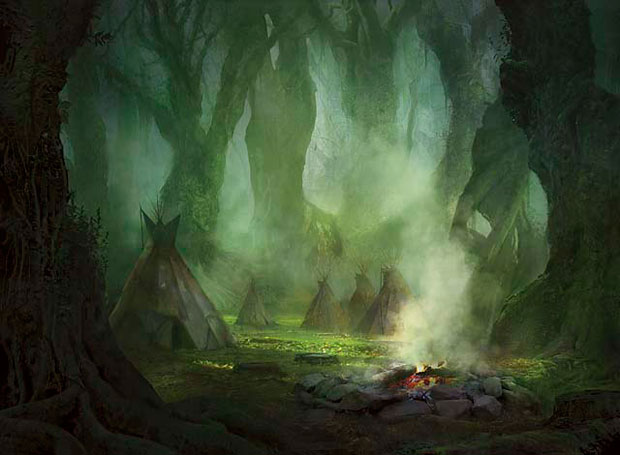
What Went Wrong?
On the balance, I can’t say there was much. Vigor is a hard card to answer in Ears, as we’ll see in the next post breaking down the deck. But on balance, I think it’s fairer to ask of Ears of the Elves, what went right?
See you then!
Duels of the Planeswalkers: Teeth of the Predator (Part 2 of 2)

Welcome back!
As we begin, a note about my opponent, Samantha. Sam is eleven, and has been playing Magic for the better part of a year. She (like all of us!) has a ways to go, but she most certainly is a competent player, and can steal or earn wins with regularity. Outside of the actual teaching of the game, I have never ‘gone easy’ on her or let her win, so when she does some remarkable play (like beating my Naya Allies with her rogue mono-Black in two out of three yesterday), I am remarkably proud.
But as any pilot knows, sometimes it’s the player, sometimes it’s the deck, and sometimes it’s luck. The first one is probably responsible for most losses, but somehow gets blamed the least. The last one is probably responsible for the least losses, yet somehow gets blamed the most. Life is funny like that.
But when Sam took two of three plioting Nissa’s Ears of the Elves against Garruk’s Teeth of the Predator, I felt the answer lie right there in the middle. In this post, we’re going to break down Teeth, and see if it has any real bite. (Sorry, I had to.)
First off, in these analyses you might have noticed that I’m not discussing mana base. Ordinarily in a deck review that’s one of the most vital things to hone in on, but these Duels of the Planeswalker decks are fairly straightforward in that department: basic land only, all but one of them (Ears) is mono-coloured. Jace’s and Liliana’s decks run 25, the others 24. Voila.
Given that, it’s better to look at the actual mana curve each deck is employing, and in Garruk’s case, he’s a little spread out!
Mana Ramping
One of Green’s solid traits in the Magic colour pie is top-shelf mana ramping. “Ramping,” for those unfamiliar with the term, refers to cards which accelerate your mana production. Green has the ability to reach a ten-mana finish line far faster than any other colour, be it through “mana dorks” (weenie creatures that produce mana, like Llanaowar Elves or Arbor Elves) or spells such as Rampant Growth and Harrow.
There is the odd and occasional bit of ramp in other colours (notably Black’s infamous Dark Ritual, which due to its temporary, one-shot nature is quite fitting thematically), but Green easily tops them all.
Another obvious characteristic of the colour is the creatures it produces. Green tends to get the most “bang for its buck” when it comes to creatures, possessing the lion’s share of “fatties” as well as the most efficient beaters (cheapest cost versus power). Combined, this allows Green to do is to play more dangerous threats, earlier in the game.
Consider the following Zendikar-block play. Turn 1 Forest, Arbor Elf. Turn 2 Forest, Leatherback Baloth. A 4/5 beater on turn two? You’ve just put your opponent on a five-turn clock on your second play of the game.
Bringing This Back to Teeth
So now we have some fundamental questions to ask of the Teeth deck. If it’s playing a fatties strategy, how broad is its mana curve? Does the deck expect you to drop massive critters as its path to victory? If it’s heavy on the back end (lots of expensive spells), does it provide you enough ways to get there earlier through ramp, so that you’re able to cast your endgame spells while your opponent is still playing midgame ones, giving you that vital competitive advantage? And what gaps are in its spellset- what are the weaknesses it’s vulerable to and can do nothing about?
Let’s take a look.
Not surprisingly for a Green deck, Teeth is packed with creature threats- a full 20 of the 36 non-land cards are critters, and one of the spells (Howl of the Night Pack) does nothing but give you a ton of Wolf tokens. It also carries three artifacts, two of which are crap (Wurm’s Tooth, though its inclusion is probably appropriate in a new-player deck as the Duels decks are positioned to be), and the other is quite solid rare (Loxodon Warhammer).
Let’s start with the spells, since for Green these often are there to support the beaters. Teeth runs some things you might expect: three Giant Growths, two Rampant Growths, and two Overruns. It rounds this out with several suboptimal choices: a pair of Urza-block Blanchwood Armors and a Natural Spring. Howl of the Night Pack is conditional- with enough ramping to get there quickly, it can add some serious numbers to your critter army, but the 7-mana pricetag is steep regardless.

The Mana Curve
Let’s look at those Rampant Growths again for a moment. A fine choice, a Growth actually has two beneficial effects. First, yes, it adds a land to the battlefield for you. But at the same time, it also thins out your deck, increasing your chance of drawing a non-land card (because let’s face it, you probably aren’t too keen on that twelfth Forest at the end of the game). But as solid a card as it is, Teeth only gives you two of them, and only the somewhat weak Civic Wayfinders help with land. Mana ramp, then, has a bit of a cameo appearance in Teeth of the Predator, and this doesn’t bode well for the broad mana curve the deck sports.
A “broad” mana curve- as opposed to a “narrow” one- is one that is very spread out over casting costs. A breakdown of this deck’s creatures reveals some cause for concern:
2x One CMC (converted mana cost)
4x Two CMC
7x Three CMC
2x Four CMC
2x Five CMC
2x 6 CMC
2x 7 CMC
1×8 CMC
From this we see that 35% of the deck’s creatures cost 5+ mana (38% if you include Howl of the Night Pack), in a deck with few ramp options. Troubling! Green, which should be beating on your door early and often, is actually slower than usual in this deck (all the more so because both one-drops are walls).
Any Other Weaknesses?
As the humbling losses to Ears showed me, there is not a blessed thing this deck can do about a pesky utility creature. Sam’s Immaculate Magistrate, once it hit the board, was free to pump her elves to terrifying proportion, and there was no counterthreat I could muster (outside of Vigor) that would give her the slightest pause for thought. The deck’s other rares: Mirrodin’s superb Troll Ascetic, Verdant Force, and Molimo, Maro-Sorceror are nice, but are mainly endgame win conditions in the same vein as the rest of the deck (big, beefy critters or in the Troll’s case, a semi-shrouded regenerator).
The developers acknowledged this weakness of Green in Garruk’s other deck, the Garruk vs. Liliana Duel Deck with the inclusion of two Serrated Arrows. This deck would be far better off if it was given the same option (and an easy replacement for the Wurm’s Tooth).
A point can probably be made that if these decks are indeed intended for beginners to the game, it’s not such a bad thing to give them a taste of the weakensses of each colour as well as the strengths, but like the Jace deck which ironically couldn’t make up its mind, it just doesn’t go far enough to be consistently solid. In that sense, I’d say that Teeth of the Predator will give a new player a much better understanding of Green’s flaws than its strengths, though most new players will probably be perfectly content for awhile drawing the foil Verdant Force.

FINAL RATING: 2/5
Review of ‘Teeth of the Predator’ by Kelly Reid
In a bit of serendipidous timing, Kelly Reid of the MtG financial blog Quiet Speculation presents his vidcast review of Teeth of the Predator.
Kelly takes a different approach, assessing the deck from a collector’s standpoint rather than getting into the playability and composition of it. In any event, it’s well worth a watch:
http://www.quietspeculation.com/2010/06/video-review-of-garruks-dotp-deck.html
While you’re there, have a look around- his is easily one of the better weblogs on Magic.
Duels of the Planeswalkers: Teeth of the Predator (Part 1 of 2)
Garruk has an unusual bit of competition in the Duels of the Planeswalkers set, which is to say that he is one of the two Green-based decks available (somewhat curiously, no White deck was made). To find out how Garruk’s Teeth of the Predator deck stacks up in comparison, I sat down with Sam to pair the two off against one another. Would the Wildspeaker pack enough punch to overcome Nissa’s Ears of the Elves?
Game One
Sam’s on the play to begin, and drops a Forest and an Elvish Eulogist to start the tribal ball rolling. And while there’s nothing tribal about the Wall of Wood, I’m happy enough to get it out early as my opening play. We drop nothing but land on turn 2, and on turn 3 I finally have a threat: Trained Armodon.
Fear him.
As we enter turn 4, Sam is looking good with three Forests and a Swamp, and taps to play the Lys Alana Huntmaster. I go in with my Armodon for 3 and trot out a distinctly unsexy Giant Spider, who is freshly celebrating news that he’ll be reprinted in Magic 2011.
Not to be outdone (feh), the Moonglove Winnower enters the battlefield on turn 5, which generates an Elf token from the Huntmaster. Meanwhile, Big Dumb Beats(tm) roll on with me turning five Forests sideways and laying down a Spined Wurm.
It’s now decision time.
In my hand I have a sixth Forest, a Howl of the Night Pack and an Overrun. The Howl costs a whopping seven mana, which means I’ll get seven 2/2 Wolf tokens for casting it, but also means I’m going to have to delay my attack at least a couple more turns fishing for that elusive seventh Forest. This could, statistically, take up to three turns, which means no swarm until turn 8 because I want every body I can get for the Overrun.
Against some decks, those few extra turns might not be troubling, but having played with Ears I know how big the deck can get in a hurry, and she proves my point on turn 6 with Jagged-Scar Archers, a robust now 6/6 Elf who promises only to get bigger.
Telling myself that I’m taking the smart play over the pretty play, I cast the Overrun and go all in with the Armodon, the Spider, and the Wurm. When the dust settles, the Spider Stands alone, but her Elves are much reduced in number (including the Archers) and Sam stands at 8 life. I’m still at 20.
I eventually do draw that seventh forst, on turn 9, and drop the Howl. Her Immaculate Magistrate makes a cameo at the end, but the wolves finish their good work in short order.
Game Two
This one’s ugly. Sam opens up again with the Elvish Eulogist, and gets in an early attack before I lay a defender on turn 2 (Runeclaw Bear). She adds Gaea’s Herald next, while I have to make do with a Wurm’s Tooth. Not the worst position to be in, but it all goes pear-shaped when she drops the Lys Alana Huntmaster on turn 4, the Immaculate Magistrate on turn 5, and Elvish Promenade on turn 6.
My plays? Giant Spider. Blanchwood Armor. Natural Spring. Rubbish.
Sam sends increasingly massive elves to pummel me until I die.
It doesn’t take long.
Game 3
An epic contest, the tiebreaker. History repeats itself in the opening as Sam plays an Elvish Eulogist and I answer with a Runeclaw Bear. Turn 3 brings me a Civic Wayfinder (and another Forest to hand), and the Bear starts going to work in the red zone. When Sam lays the Immaculate Magistrate in turn 4, though, I start to sweat.
Sam wastes no time in establishing board dominance as she drops a pair of Elven Riders on turns 5-6, and I have no answer to the problem at hand until I topdeck Vigor on turn 7. Vigor! If there was one card in my deck that would laugh in the face of massive elves, it is this one, and I send the Bears and a Spined Wurm I cast on turn 5 into the red knowing she’ll be loathe to block (but can’t afford not to).
Sam takes the 2 from the Bears but blocks the Wurm with some riders, and the Wurm becomes 11/10. Now it’s Sam’s turn for a conumdrum, as she’s got an Eyeblight’s Ending in grip and two tempting targets. She makes the right play, though, when she kills Vigor, and I see my dreams of an evening’s victory slowly begin to circle the bowl.
I still go in with Vigor’s legacy, the massive Wurm, and she blocks with her Elvish Riders. A pair (!) of Giant Growths later, my Wurm is resting with Vigor in the graveyard and her elves are celebrating with mulberry wine.
Sam’s Moonglove Winnower in turn 8 is decorative, as she gets there with the Riders.
Thoughts
Nissa was right! Dabbling in Black magic certainly has given her Elves an edge, and the beasts and fauna of the wood that heed Garruk’s call can only hang their heads in shame.
What went wrong?
Join me Thursday as I deconstruct Teeth of the Predator, and uncover some fundamental (and fatal) flaws in its composition.


 Ertai's Lament